Showing posts with label middle grade. Show all posts

Wednesday, August 6, 2014

Interview with Mary G. Thompson, author of Evil Fairies Love Hair

Today it’s my pleasure to interview fellow Enchanted Inkpot member, Mary G. Thompson, about her latest novel, EVIL FAIRIES LOVE HAIR!

Here’s a brief description:
What if you could get your fondest wish? You could be gorgeous, brilliant, a star athlete, or a great singer, or you could put a hex on your worst enemy. And all you have to do is raise a flock of two-inch-tall fairies. Easy, right?
            Wrong.
            Ali learns this the hard way when her flock starter fairies get to work. Raising them means feeding them, and what they eat is hair. Lots and lots of human hair.
            Where to get the hair is Ali’s first challenge. What about the beauty salon? Easy, right? . . .
            Before long, Ali’s friends, classmates, teachers, sister, and parents are entangled with the evil fairies, who have their own grandiose and sinister agenda. It’s up to Ali to overcome these magical troublemakers and set things right.


Hi Mary! First, let me tell you how much I loved EVIL FAIRIES LOVE HAIR! What a unique spin on fairy lore.  We have seen many types of fairies in children’s literature, but none like this one! The fairies were deliciously evil, yucky and hysterical – and I don’t think I’ve ever used those words to describe the same thing before! Where did you come up with the idea of these sneaky, hair loving fairies praying on the deepest hopes and wishes of children?

Like most of my ideas, the fairies sort of popped into existence out of nowhere. I was on the subway one night and the title “Evil Fairies Love Hair” popped into my mind. I wrote the opening scene in my notebook on the way home. The idea of growing fairies by feeding them hair seemed perfectly natural to me, and who wouldn’t do it for their fondest wish? I’d probably do it for nothing.

I would too! And I love the title by the way!  

I was immediately captivated by the richly painted fairy world, with all of its rules – including a contract and a rule book!  How did you create this fairy society?  What was your world building process like?

Well, being evil, the fairies had to have a scheming leader, in this case, the pompous and self-aggrandizing Bunniumpton, who likes to be called “Grand Miss Coiffure.” But I liked the idea that even though the fairies have magic, they don’t really control anything about the magical world. They are subject to rules just as much as the kids are, and the rules of the magical world are mysterious and nonsensical to us mortals. I wanted to create a world in which nobody can ever truly get the upper hand. If you think you have things under control, you will be humorously knocked off your pedestal. The adults have no idea what the kids are doing, the kids have no idea what the fairies are really doing, and the fairies are doing magic they don’t fully understand. So my world building was all about ensuring that everyone had just enough information so that all the right things could go wrong. The whole world is saying, “don’t take yourselves too seriously.”

I loved Ali, the protagonist, and I’m sure readers will easily relate to her and her insecurities. Who hasn’t lived in a shadow of a star sibling or friend?  And Michael was such a great contrast to her. All of the characters were so well developed.  Which character in the novel do you relate to the most?  And which one was the hardest to write?

It would be hard to deny that Ali is sort of based on me. Everyone who knows me exclaims that the cover looks exactly like me! Unlike Ali, I never had a problem with my grades, but my fondest wish would be to be smarter. You can never be smart enough, in my opinion. I wouldn’t say any of the characters were hard to write. Maybe the perfect little girl who torments Bunny. I hated her too!

In this book nothing as it seems.  The good kids aren’t really as good as you think, and the bad kids aren’t really as bad as you (and the adults!) think, and the adults that are supposed to be keeping an eye on the kids are clueless. There are so many twists and turns, and yet it is such a funny story.  I laughed out loud many times while reading this!  Was it hard to keep track of it all and weave the fantasy, humor and exciting plot together?

I wouldn’t really say it was hard. Humor, if it works, just sort of happens in the flow of things. Most of the adults’ cluelessness and the plot twists came from what seemed funny to me and what made me laugh. 

I loved watching Ali learn that she had to rely on herself and her own cleverness to foil the evil fairy plot. To me, the real magic occurs when she believes in herself.  This is far from a preachy book, but is there something in particular you would like readers to take away from the novel?

The truth is, I just want people to laugh. Yeah, believe in yourself, don’t believe magical creatures, be true to your friends … but mostly, laugh!

Well, I certainly laughed while reading the book, and I’m sure everyone else will, too! As the story progressed, the kids in the book re-evaluated what a wish is worth, what the price is, and if they really wanted their wish to come true.  The book explores the idea of careful what you wish for – you just might get it.  If those evil fairies gave you one wish, what would it be?

If I had to stick to the fairies’ list of options, I’d wish to be smarter. Like Ali says in the book, don’t go wasting your wish on a hex! If you’re smart, you can find a way to get all your other wishes.

Very good advice! What are you working on now? (if you feel comfortable sharing that)

I have many irons in the fire. Watch this space!


We will! Thanks so much, Mary!

Monday, May 19, 2014

Spring MG covers: The Light! And the genders. Also hooves. And goldfish.

Ever since Harry, Ron, and Hermione, the two-boy-one-girl combo has been a winner. That’s apparent in this season’s roster of middle-grade fantasy covers, although we see pretty much every combination of genders. (Interestingly, there seem to be more all-girl covers than all-boy—we’ll leave you to debate what THAT means.)

The girls, we’re pleased to note, appear to be active  and self-sufficient—we didn't find any “boy reaches out to help girl climb the castle stairs” motifs. Girls have swords nowadays, and they know how to use them.

Once again this season, light is a big factor. Sometimes  our heroes run toward it, sometimes away, but designers know that a bright and mysterious light on a cover always will draw the eye.

Some publishers seem to be lowering the age-range for middle grade—we included several covers this time that were earmarked for ages “8 to 12” rather than the usual “9 to 12” or “10 to 14.” As a result, some of the covers look a little younger than in the past.

These covers hit the bookstores between January and June 2014. If you know of a great one we’ve overlooked, please link to it in the comments. 

And tell us which is your favorite!

(Click the link to see the covers . . .)

Monday, September 30, 2013

Fall MG Covers: The Light Fantastic

Every season seems to have its dominant graphic themes, as designers do their best to drag us across the bookstore and make us pick up That Book.

This fall, middle grade fantasy covers are calling us to the light. Usually, it’s a blazing sky with one or more heroes either hurling themselves into it or running for their lives. But who can say no to flashes of lightning, glowing gizmos, or good old-fashioned magical energy?

I have to say, I like the fact that so many covers show boys and girls battling demons (or whatever) together and as equals. No more boys with swords, girls standing there looking scared. We're making progress!

Designers this fall also are fond of the “magical peephole” technique, in which the solid plane of the cover is broken by a circular portal to a fantastic world we want to see more of.  

As always, some designers use a sprightly cartoonish style to reassure us that all will be well. How bad can a zombie apocalypse be if it’s comic?

And then there are those who invent cool graphics to tell their tale: The forthright Flora matched with the flowing fonts of FLORA & ULYSSES, or the marvelously shifty Alexander Baddenfield and his cat. Being a typeface fanatic from way back, I’m drawn to THE CREATURE DEPARTMENT’s amazing alphabet.

As always, we’ve spread our parade of covers over two days. Come back tomorrow for a content-oriented post: Dragons! Princesses! And, of course, cats.

We’re featuring books published July-December, 2013. If we overlooked an amazing cover, please link to it in the comments. And tell us which cover is your favorite!

Click the link to see more covers . . .


I will face this scary flaming thing alone!


Wednesday, July 31, 2013

Interview with Susan Fletcher, Author of FALCON IN THE GLASS


I’m delighted to welcome Susan Fletcher to the Inkpot today, to talk about obsession, persistence, craft, and her new middle-grade novel, FALCON IN THE GLASS (McElderry / S&S, July 2013).

The award-winning author of SHADOW SPINNER, ALPHABET OF DREAMS, and many other books, Susan also teaches in the Vermont College MFA program. Everything I’ve ever read by Susan is beautifully written, and FALCON IN THE GLASS, set in Renaissance Venice, is no exception.  Here’s a summary of the action:

In Venice in 1487, the secrets of glassblowing are guarded jealously. Renzo, a twelve-year-old laborer in a glassworks, has just a few months to prepare for a test of his abilities, and no one to teach him. If he passes, he will qualify as a skilled glassblower. If he fails, he will be expelled from the glassworks. Becoming a glassblower is his murdered father’s dying wish for him, and the means of supporting his mother and sister. But Renzo desperately needs another pair of hands to help him turn the glass as he practices at night.

One night he is disturbed by a bird—a small falcon—that seems to belong to a girl hiding in the glassworks. Soon Renzo learns about her and others like her—the bird people, who can communicate with birds and are condemned as witches. He tries to get her to help him and discovers that she comes with baggage: ten hungry bird-kenning children who desperately need his aid. Caught between devotion to his family and his art and protecting a group of outcast children, Renzo struggles for a solution that will keep everyone safe in this atmospheric adventure.

 
Renaissance Venice and Murano come alive in FALCON IN THE GLASS, richly present in everything from the ferocity of the guilds to the smell of wood smoke and tar.  What inspired you to set a story there?

            Obsession. Well, it wasn’t a throw-it-all-away-and-join-the-circus kind of obsession, but ever since I saw a documentary on Venice many years ago, I’ve been dying to explore it both in person and through story.  What is it about Venice? I think it’s partly that it’s so stunningly beautiful, and when you wander through those old streets and canals you can almost imagine that the 21st century has dropped away and you’re living in the 15th century or before. And it’s also partly that Venice is, you know, sinking, and there’s this awareness that it’s not going to be around forever. And I think this sort of connects on a deep level to the sinkingness of everything beautiful in life. Wait! I mean, I don’t want to be maudlin but…  Everything beautiful is temporary, yes? And that’s part of what makes it so precious. And Venice reminds me of this in a piercing way that has haunted me for years.   

The “bird people” in FALCON IN THE GLASS fascinated me.  Their relationship with birds was eerie and magical, yet wholly believable.  Did you draw on existing legends to shape this, or did you strike out and create your own mythology? 

            Oh, I’m so glad you liked those guys! The bird people came out of my Dragon Chronicles series; in those books, people who can speak telepathically with dragons can also “ken” with birds. In my last book, Ancient, Strange and Lovely, I brought the bird people into an alternate 21st century. I began to wonder what the bird people had been doing all this time.  They’re different, so definitely they would have provoked fear and rage. That’s just what happens historically to people who are perceived as different.  Maybe they would have been forced to move from one place to another. Also, there’s a kind of neither-here-neither-thereness to the magic of the bird people. I mean, there are horse whisperers in real life; why couldn’t there be, like, bird whisperers, too?  One of the things that makes me want to spend time in my imagination with the bird people is that I can almost believe they might exist for real.

Craft and artistry play a big role in this book and in the life of the young apprentice Renzo.  Midway through, you write that Renzo reaches a point where he “no longer strove to master the glass but only to know it, to play.”  How does this idea of play resonate for you as a writer?

            Some people say you should write what you know, a piece of advice I flagrantly disregard at every opportunity. Well, okay, that was flip, and not entirely accurate. But I am often attracted to write about things I don’t know much about; I find out about them in the process of writing and research. However, it occurred to me that I spend the bulk of my days thinking about, teaching about, writing about, and in the act of attempting to create something original and harmonious. And that it might be interesting to try to write about that.
            For me, finishing a novel requires a kind of dogged persistence. It’s a long process requiring a suite of hard-won skills. But when I approach a book with a sort of grit-your-teeth determination, I can crush all the life out of it. My best writing comes when I lighten up and approach it in a spirit of play. For me, writing a novel is a delicate balancing act of craft, persistence, passion, and joy. And I imagine that this is true of other art forms, too.

As well as being a writer, you teach writing, too.  Has teaching changed the way you work as a writer?  Did it affect the way you saw the master/apprentice relationships in the book?

            I’m not sure that teaching has changed the way I write, but it has forced me to be more conscious about things I used to do by the seat of my pants. How do we know when there’s too much exposition, or when subplots are overshadowing the main plot? I’ve had to sit down and really think about stuff like that. Because of teaching, I have more experiences of seeing writers grappling with and transcending a difficult problem; I can sometimes borrow my students’ energy and hope and bring it to my own work. I’ve learned so much from my students. And from my colleagues at Vermont College, who are scary-smart and wise in the ways of art-making. 
            But I love your question about the master/apprentice relationships. As I wrote FALCON IN THE GLASS, I was thinking about this relationship only from the apprentice’s point of view, seeing it through Renzo’s eyes. So what does the book (inadvertently) say about mentors?  Well, Renzo is hungry to learn, as are many of my students. He gets bored with repetitive lessons. His love of the art originated with a nurturing mentor (his father) but the stress of an impossible challenge posed by an unsympathetic mentor forces him to create something entirely original. Hmm! Maybe what I’ve said (without thinking consciously about it) is that a hungry student can thrive despite his mentor’s personal style? That a nurturing mentor and one who poses seemingly impossible challenges can both be beneficial?

FALCON IN THE GLASS is filled with wonderful historical details—from the tools of the glassmaking trade to the Bocca di Leone, the Lion’s Mouth through which Venetians could accuse someone of heresy or witchcraft.  Can you share any tips about historical research?  How to do it well, and how to keeping it from overwhelming the story?

            I’m not an expert on historical research. Fortunately, I know how to find experts! A number of wonderful librarians helped me unearth the information I needed, including those at Vermont College, who, through interlibrary loan, have access to an array of books and articles that seems just about unlimited. 
            Also, there’s this whole serendipity thing, which I have heard other writers speak of as well. Sometimes when I’m casting about for someone who knows a lot about my subject matter, things just click into place in ways that seem almost miraculous. It happened to me again with FALCON IN THE GLASS. One example: A writer friend, Emily Whitman, mentioned to me that Patricia Fortini Brown, a Princeton professor and expert on Renaissance Venice, would be speaking at a local college in a few days.  I went to the lecture and introduced myself; Dr. Brown offered to vet my manuscript and answer questions. Her generosity knocked me out—and she was a huge help in confirming details and digging out little-known information.
            Yes, research is delicious, and it’s such a temptation to put in every cool fact I’ve discovered! And it’s also true that a detail, like a Bocca di Leone, can inspire an entire scene. But I try to put in only what my viewpoint characters would plausibly notice in the moment, and let the rest of it fall away.


Excellent advice!  I'm curious:  Are you an outliner?  Or do you like to see where the story takes you?

            Usually I’m not an outliner, but FALCON IN THE GLASS was an exception. I had taken a screenwriting class from my friend Cynthia Whitcomb, and she had demonstrated a technique of outlining an entire screenplay in advance. I thought, Hmm, I wonder… To my surprise, in a couple of weeks I had the outline of this novel. Even more surprising—the outline held up until I was about ¾ of the way through the first draft. I found that I didn’t mind knowing in advance generally where I was going. There were enough surprises along the way to keep me exploring. The next book is perking along without an outline, so I don’t know when I’ll try Cynthia’s method again.

Falcon in the Glass is a wonderfully original blend of history and fantasy for middle-grade readers.  What draws you to write for this age group?  What is it about the combination of fantasy and history that appeals to you?

            The worst year in my life was the year I turned fourteen.
            Most of my protagonists are fourteen or fifteen years old.
            Coincidence? Don’t think so. But the connection is not deliberate. I just want to write about kids that age.
            Sometimes I wonder if subconsciously I’m just trying to get fourteen right. Kind of like the movie Groundhog Day, where the Bill Murray character has to keep living the same day over and over until he stops making a total hash of it.
            I can’t go back and actually be fourteen. So maybe I have to do this, instead.
            As to the fact that FALCON IN THE GLASS lives in the borderland between historical fiction and fantasy…  I have always been attracted to the long ago and faraway. Can’t tell you exactly why.  And I love books with a little bit of maybe-magic. The kind of magic that wicks across the boundary between reality and imagination, suggesting there’s more to this world than meets the eye.

"Maybe-magic" is a beautiful way of describing it.  Thank you so much for stopping by the Inkpot today, Susan!


                                                                           ***

Interview conducted by Amy Butler Greenfield, who was on her way to a history Ph.D. when she gave into temptation and became a novelist. Her most recent book is the YA historical fantasy CHANTRESS (McElderry / S&S, 2013).  She lives with her family in England, where she eats chocolate, bakes cakes, and plots mischief.

Wednesday, July 10, 2013

Interview with A.J. Paquette, Author of RULES FOR GHOSTING

I’m thrilled to interview Ammi-Joan (A.J.) Paquette today. Not only is she an awesome author with a brand new middle-grade book out, but she’s also my wonderful agent. Can you say multi-tasking superwoman?

Joan’s latest book, Rules for Ghosting, is out this week! Here’s a summary from her website:

The ghostly adventures of twelve-year-old Dahlia, along with her new living friends Oliver and Poppy, as they dodge a creepy Ghosterminator, a town official with devious plans, and set out about solving the mystery of Dahlia’s death—before it’s too late.

RULES FOR GHOSTING

It’s great to have you at the Inkpot, Joan. Can you tell us a little about the inspiration for this book? How did it become a “ghostly caper”?

Thanks so much for having me here! Well, I actually began writing RULES FOR GHOSTING about 10 years ago, and Dahlia the ghost was a part of the story from the very beginning. I have always loved ghost stories, and “Casper the Friendly Ghost” was an early favorite of mine. So all of that played into the development of Dahlia and her friends. And those were solid components of the story in its original form. What took more shape in recent years was the characters of Oliver and his siblings, and the other antagonists that shape the story and add so much action, octane, and hijinks to the story. I guess what I’m trying to say is the “ghostly” aspects were with the story from the get-go, but the “caper” was the result of more care and development.

At your launch party for Paradox last week (sci-fi thriller, anyone?) you mentioned that Rules for Ghosting was one of your earliest projects and that it’s gone through many iterations over the years. How has the book developed?

As mentioned above, this book has been taken quite a while to evolve into its current form: It was, in fact, the first novel I began writing after deciding that I wanted to seriously pursue writing for children with an eye toward publication. It began life as a 9,000 word story that was rich on character but very (very) thin on plot. It would take 9 years and more than half-a-dozen substantial revisions to get it to the eventual 60,000 word finished product that’s published today. A labor of love, but one that I’ve never gotten tired of through all of that. As you might imagine, it’s incredibly rewarding to look up today and see the finished product on my shelf!

Do you believe in real-life ghosts? If so, do you think they’d approve of your depiction of them in your book?

Ohhh, interesting question! I am not closed to the possibility of there being other beings out there lurking in the void, though I’m not wild about the thought of any spirits hanging around my messy house (particularly Mrs. Tibbs, who I’m sure would have quite a bit to say on the matter!). As to the matter of their depiction, well, I really see ghosts as being people very much like you or me: full of personality, quirks, and all, so in that respect, I have to think that Dahlia and her friends would probably get a kick out of seeing their portrayal. I hope I have done them justice J

How did you go about developing the ghost world in the story?

I had a lot of fun building up the ghost world in RULES FOR GHOSTING. It’s a world that’s full of red tape, bureaucracy, with just a few otherworldly conveniences thrown in for comfort. The world itself grew gradually around the characters and the situations they found themselves in. I think it makes a great foil to the active kid characters in the book, contrasting their take-charge approach with its own ponderous bulk.

The topic of death obviously comes up when your main character is dead! How did you go about tackling that subject for a young audience?

I think death is an inevitable part of any book that has ghosts as a subject, but it’s my hope that showing a very active, vibrant afterlife will counteract any negative side of the story’s focus on death. If anything, the ghost world is clearly shown as a bustling, entertaining place with plenty of challenges and opportunities for the enterprising ghost. Also, I really think that young readers are stronger than we sometimes give them credit for. A few chills and a judicious look at the dark side—tempered with heart and humor, of course—seems just right for the target age group.

What are some of your favorite ghostly books?

Oh boy, there are some great ghost books out there! A few which come right to mind that I’ve enjoyed in the past few years are: LILY’S GHOSTS, by Laura Ruby; GIVE UP THE GHOST, by Megan Crewe; and NOTHING BUT GHOSTS, by Beth Kephart.

You write in a variety of genres and formats (fantastical picture books, YA sci-fi thrillers, realistic middle grade, etc.). How does fantasy weave into your body of work?

I’m a huge fantasy and science fiction reader, so when it comes to writing, that tends to often be the type of story I am drawn into as well. It’s just such a rich and wide field of options for stories and plotlines—I guess I love fantasy so much because, quite literally, anything could happen. For a writer of fiction, what could be better?

Thanks again for stopping the Inkpot!

Thank YOU for having me! I hope you enjoy RULES FOR GHOSTING. 


Ammi-Joan PaquetteA.J. Paquette has been writing stories since early childhood. She and her sister would spend hours creating masterpieces of stapled paper and handwritten words, complete with pen-and-ink covers and boxed illustrations. The road to publication was long and winding, peppered with many small successes including: a variety of national magazine publications, being a 2005 PEN New England Susan P. Bloom Discovery Award honoree, and receiving the 2008 SCBWI’s Susan Landers Glass Scholarship Award, for the book that would later become Nowhere Girl. Her first picture book, The Tiptoe Guide to Tracking Fairies, was published in 2009. She now lives with her husband and two daughters in the Boston area, where she continues to write books for children and young adults. She is also an agent with the Erin Murphy Literary Agency. You can visit her at ajpaquette.com.


Monday, June 17, 2013

Can You Guess These Popular Fantasy Books from their Covers?

Here at the Inkpot we’re fans of the Guess the Phantom Book Covers game over at PWxyz. Today we thought we’d do our own variation, using MG and YA fantasy book covers from the past 50 years.

As you can see, the author names and titles have vanished. Are you clever enough to identify the books anyway?

Super bonus points to the cover aces who can name them all – and extra twinkly gold stars if you know the pub years, too!

Answers at the bottom!

Book 1

Book 2

Book 3

Book 4

Book 5

Book 6

Book 7

Book 8

Book 9

Book 10

Today's post was a tag-team effort between me, Lena Goldfinch, and the wonderful Amy Greenfield. We had so much fun putting it together, we're tossing around the idea of doing it again!

Confession, I'm to blame for stripping these beautiful books of their titles & author names, with sincere apologies to book designers everywhere, and Amy deserves the credit for scouting out a fabulous selection of book covers for me to choose from & for introducing our game.

Here's a little more about us and a look at our own book covers stripped of their titles & author names – just for fun.

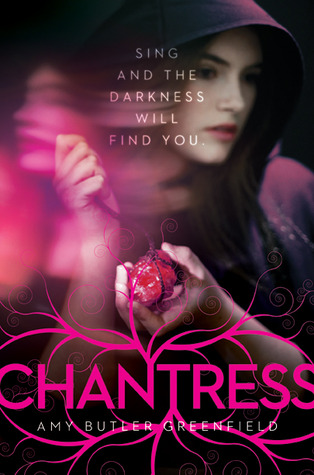
AMY BUTLER GREENFIELD was on her way to a history PhD when she gave into temptation and became a novelist. She loves music, romantic adventure, alternate history, and twisty plots, which explains how she came to write her first YA novel, CHANTRESS(McElderry/S&S, May 2013).


LENA GOLDFINCH writes young adult fantasy with a healthy dose of "sigh-worthy" romance. In her creative heart, she loves travelling to all sorts of exciting places, past and present, a perk of making things up for a living. Her new release, SONGSTONE, comes out in July 2013.


Wednesday, June 12, 2013

Interview with Mary G. Thompson, author of ESCAPE FROM THE PIPE MEN!

Today it’s my pleasure to interview fellow Enchanted Inkpot member, Mary G. Thompson, about her fabulous, fantastical, novel, ESCAPE FROM THE PIPE MEN!, which is available now!


Here’s a brief description from Amazon:

Thirteen-year-old Ryan Hawthorn has spent his life on display as a human exhibit in the multi-eyed Pipe Men’s intergalactic zoo. When his father is accidentally poisoned, it’s up to Ryan and his seven-year-old sister, Becky, to scour the universe for the antidote. Along the way, they encounter many strange creatures—from the doglike Hottini to the spindly-legged, hairy Xaxor—and learn that the Pipe Men (or, as Becky calls them, “overgrown drainpipes”) are not kindly overlords, as they had been led to believe. It's not only the humans who are planning to rebel! A wildly imaginative middle grade space-travel adventure.


Mary G. Thompson

I loved your unique concept, of having humans in alien zoos, traveling to and from their “cages” through portals. Can you tell me a little about where the concept came from?

I always wanted to do something about an alien zoo. The original kernel of an idea was that these kids lived in a house on Earth, but they hardly ever left their house, so everyone thought they were these very religious home-schooled kids. But in reality, they were spending most of their time in the zoo living with aliens. So after that I had to create the aliens who ran the zoo, and the Pipe Men popped into my mind pretty much whole.

You did a significant amount of world building – since you had to create different species, planets and aircraft, and all were so distinctive and memorable. What was your world building process?

I made a conscious effort to make each alien species unique but still somewhat recognizable. Well, the Pipe Men aren’t that recognizable! Part of the point is that you can get used to anything if you live with it day in and day out. But Ip the Horn-Puff is a big galoot; the Xaxor is buglike; the Hottini look like big blue dogs. All the aliens have their own TV shows. Aside from the aliens, the big world-element is the portals. I started with the passage with the doors and then created the calculator and figured out what it could do. Once I figured that out, it became clear why everyone would want it, and the motivations of the different species fell into place.

I loved how you seamlessly wove the seeds of revolution into your story, and nothing was how it seemed. How did you keep track of it all?!

Many drafts! To me it actually does not seem that complicated. I had a few species that all basically wanted the same thing in their own way—freedom. For some people that meant getting out of the zoo, and for others it meant taking over from the Pipe Men. But all Ryan and Becky want is to save their dad and be reunited as a family, so that simple concern kept the story grounded.

I had so many favorite characters. Becky was so funny, smart and dead on right all the time, and I loved Front and Ip.  Which is your favorite character, and why?

How can I choose?! Of course I love Becky because she is smarter than her big brother and is probably going to rule the universe some day. My favorite alien is the Xaxor because he has complex motivations. He’s out for his species like everyone else, but at the same time he understands friendship. He’s actually the most individual to me even though he technically doesn’t have a name!

If you had to visit one of the planets from the book, which one would you choose?

The kids don’t actually go there in the book, but I’d like to visit Ip’s planet, Hdkowl. Even though the Pipe Men have ruined the environment, I imagine the Horn-Puffs would be a lot of fun. I think they probably like to sing and dance.

I was struck, when I finished the book, by how all the “froms” were so distinct in appearance and personality and yet most all wanted the same things. The issues of bigotry and racism are powerful and thought provoking in the book.  Are you planning a sequel?

Everyone petition Houghton Mifflin Harcourt! I would love to do a book starring Becky that begins five years later. Ok, let’s be real. I would love to make it a trilogy!

What are you working on now? (if you feel comfortable sharing that)


My next book is a fun, humorous middle grade called Evil Fairies Love Hair. It’s about a town full of ravenous, hair eating fairies. If you grow one hundred fairies, you get a wish. But you can’t let them near your own hair, and you have to follow all the rules. Be careful—there’s a reason everyone calls them evil fairies. Look for it next spring!

That sounds fabulous, Mary! I look forward to reading it!


Interview conducted by Erin Cashman, author of THE EXCEPTIONALS.