Showing posts with label Hilari Bell. Show all posts

Wednesday, February 26, 2014

AN INTERVIEW WITH HILARI BELL -- AUTHOR OF THIEF'S WAR!


THIEF’S WAR, by Hilari Bell, will be available on March 7! 

It is my great pleasure to introduce my fellow inkpot member, the immensely talented Hilari Bell!

I really loved THIEF’S WAR, Hilari. What an exciting adventure! I know it’s the fourth book in the Knight and Rogue Series, but a reader certainly does not need to have read the other three books to enjoy the book. Was it difficult writing a novel that can stand on its own for new readers, while satisfying fans of the series?

It is tricky, though not so much in the story itself—any book that will please old readers should please new ones, and visa versa.  The hard part is figuring out how to reveal information the old readers already know (like how the magic system works) without boring them, and also how much of past adventures do you need to bring up again.  Interestingly, I’ve found that it’s the people who have read the previous books who’re more likely to want me to remind them about what happened before the current story started.  I think new readers just figure I’m telling them all they need to know, while the old readers are the ones saying, “But you’re not telling us enough about ...”

That is interesting! The characters of Fisk and Michael, and their friendship, was one of my favorite things about the book. It was a very close relationship, and yet there was some tension and history between them as well. Was there an inspiration behind either of these very life-like characters?

Some writers always start their books by creating a character, but for me the core idea of the plot usually comes first—and my Knight & Rogue books are the only exception.  One day Fisk just popped into my mind, standing in the rain at the foot of a tower and grousing about how much it sucked being squire to a hero—though Fisk put it in better, and in more archaic language.  A whole six book series grew out of that moment, but that exact scene is the first paragraph of the first book.  It had to be.

I read that you will write three more books in this series.  Do you already know where it will end?

It’s actually two more books, for a total of six.  And I’ve known the last scene in the last book almost from the start.  But that’s not to say I know everything.  For the book that follows this one, Scholar’s Plot, I knew it would be a murder mystery at a university, and that it involved Michael’s brother, and a few things that happened in the overarching series plotline—but until the time came to start prewriting, I had no idea who was murdered, why they were murdered, or who murdered them.  And for a mystery, that’s a lot not to know. 

I read on your website that the first book you sold was the fifth book that you wrote, and when it sold you were working on your thirteenth book! How many books have you published?

This one will bring the total up to twenty, and you’d think that would make your career secure.  One tip—if you want career security, don’t become a writer!  On the other hand, I’m now writing the first draft of book six, and there’s something so wonderful about writing a first draft.  My best friend is a writer too, and whenever one of us is writing a first draft the other one is jealous, because it’s so exhilarating and centering and satisfying.

Twenty books - wow! There is magic in a first draft, when the story comes to life. Do you work on one book at a time, or do you jump around?

One at a time.  I’ve heard of people who could work on more than one book at a time, but I can’t imagine doing it.  When you’re writing a first draft, you’ve got so much of the story stuck in your head...  There’s not room for two at once, and it would take me days, if not weeks, to unload one story and completely reload another.

Your fantasy worlds are so well drawn. I loved the magica and Gifts in this series, it is so unusual and exciting at the same time. Can you describe your world building for us?

I have a ball with world building!  I used to dread it, but then I came across a chapbook, Checking on Culture by Lee Killough, that gives you, literally, a culture building checklist.  It’s designed for science fiction, so it starts by asking you to figure out your alien’s Habitat, Anatomy and Psychology, and then it gives you categories in alphabetical order:  Agriculture, Architecture, Arts...  With fantasy some of that stuff doesn’t apply, but most of it does, and I just bop around and work things out so that they work for my plot and characters.  Clothing, Commerce, Communication, Cosmetics....  I find that my world building changes my plot, and my plot changes my world building, and this structured checklist creates this wonderful organic process where things start pinging off each other.  Machines, Marriage, Math/counting, Medicine, Modesty...  It’s a great tool.

Thanks for that tip – I’m definitely going to check that out!  Which is your favorite character from this book, and why?

People keep asking me if Fisk is my favorite or Michael—and I honestly don’t have a favorite between the two of them.  I love Fisk’s cynicism...but Michael’s craziness makes him a blast to write.  Of the minor characters...  Atherton Roseman is one of my better villains, if I say so myself, and the mad jeweler’s dialogue was incredibly fun and cool to write.  Someone in my critique group asked me how I created dialogue so disjointed and crazy...and I had to admit that it just welled up, completely effortless.  Which may say bad thing about the state of my sanity.

What are you working on now (if you want to share!)?

Book six—which is still creatively titled Book Six.  I hope something better comes to me soon.  And I do have a couple ideas for things I’d like to write after this, but I’m not sure which one I’ll take on.

Do you have any talents besides writing?

Not notably.  I might have been talented in some other area, if I’d taken the time and work to develop it.  But talent is a dime a dozen kind of thing, except for a rare few—which I’m not.
And now, a few questions for our readers to get to know you better!

Favorite Book:  Can I do favorite author instead?  Right now Lois McMaster Bujold leads the pack with her Miles Vorkosigan books—though her Sharing Knife books come a close second.  She’s fabulous.

Favorite Quote: I don’t have one particular favorite, but Thomas Edison’s statement that “The reason there are so many missed opportunities is that opportunity usually shows up dressed in overalls and looking like hard work” is a goodie.

Favorite Food: Carmel corn or kettle corn.  I’m OK with chocolate, but caramel is my favorite—and then add popcorn and salt...  Oh my.

Favorite Ice Cream: Actually not that big an ice cream eater—possibly because I have teeth that are sensitive to cold, of all the weird things.

Favorite Place: Camping on the coast, Cape Blanco State Park, in Oregon.  Camping is my favorite thing to do, and that’s my favorite place to do it.

Thanks so much, Hilari! If you’d like to read more about Hilari, you can check out her website here - and the link to pre-order the book on Amazon is here

Intrigued by THIEF’S WAR? Read on:
“Who are you?  What are you doing here?  Where are...?”
A sudden suspicion of the answer stopped my tongue, but they knew what I’d been about to say.
“Yah,” said one-eye.  “We’re orfinks, mostly.  Those as ain’t, they’s better off here than home.”
I’d heard bits of the Tallowsport accent this week, but never so thick and pure.
“Surely you have kin in this town who’d take you in.”
There was a long silence, then the girl shrugged.  “They were chasing him.  And it’s not like they don’t know about us.”
The blond boy growled under his breath, and a murmured echo came from the shadows—a feral sound that lifted the hair on the back of my neck.
“That’s how come we’s here,” one-eye said.  “It’s the Rose.  He says anyone takes us in, they get the same as our famblies got.  We’re supposed to be dead, see?”
He said it with a casual acceptance that chilled my blood, even as it broke my heart.
“Who is this Rose?” I demanded.
All of them stopped, staring as if I’d asked why the night was dark.
“The Rose,” said the girl. “Tony Rose.  Atherton Roseman.  The man who runs this town.  The man who owns the six thugs who were about t’ beat the crap out of you!”
--Thief's War

Interview conducted by Erin Cashman, author of THE EXCEPTIONALS.

Monday, February 24, 2014

Rogues: Who prefers the bad boys?


I've always liked Robin Hood more than King Arthur, Han Solo more than Luke Skywalker--and I'd take Ranger over Joe Morelli, too, not to mention Phillippe Gaston from Ladyhawke over the faithful knight.  And everyone likes Jack Sparrow better than...what was his name?  Some people will say that it’s the rebel appeal of the outlaw, some will say it’s the “I could reform him” syndrome...and maybe there’s truth in both those theories.  But for me...I like a practical man.  I like a man who confronted with a daring quest is more likely to say, “Are you out of your mind?” than “Onward, my brave men.”

And then there’s the whole class of “noblemen in disguise.”  Does their exercise of trickery and deceit let Zorro and the Scarlet Pimpernel count as rogues, even if they aren’t criminal criminals?  By their own society’s rules they were committing crimes—hence all those masks and disguises.

Or is “a rogue” simply defined by their wonderfully irreverent attitude?  One of my favorite rogues is the pooka in Emma Bull’s War for the Oaks, in which the dark and bright fey are fighting a war for the city if Minneapolis.  The pooka and a water sprite go to recruit the female leader of a rock band to fight on the side of the bright fey...and they don’t care at all that she’s not interested in being recruited.  When she threatens to call the police, the pooka says, “Summon your police.  What will you tell them when they come, and find a dog and a pool of water?”  Like I said, practical.

But who are some of the fictional rogues who’ve won your heart?  And why?  I sent this question to the Inkies, and received a veritable rogue’s gallery—and found several titles I want to try!

From Dawn Metcalf:
Skif from Mercedes Lackey's Valdemar books.
Aragorn from LoTR.
Cat from Joan D. Vinge's Catspaw.
Cassandra Clare's irreverent Will from the Infernal Devices series.
Almost everyone in Neil Gaiman's ANANSI BOYS (although "Low Key" is probably tops).

From Ron Smith:
How about the bad girls?
Arya Stark, Game of Thrones
Celaena Sardothien, Throne of Glass
Tank Girl!
Lisbeth Salander, Dragon Tattoo

From Ellen Booraem:

Roiben in Holly Black’s Modern Faery Tale trilogy. He has that unbeatable combination of arrogance, intelligence, and damaged soul.

From Lena Coakley:
For me it all goes back to Heathcliff, the original rogue. (In fact, he is based on a character from the Brontes' early writings called Alexander Rogue.) Although Heathcliff is a truly despicable person, there is one pure thing about him, his love for Catherine.

From Amy Butler Greenfield:
Yes. And speaking of original rogues, I'll put in a word for Henry Crawford
in Mansfield Park. Not a good match for Fanny, it's true, but it would be a
mighty tedious book without Henry's wit and flair for all things dramatic.

From Erin Cashman:
Aragon from LOTR is my favorite - but how about Gansey from The Raven Boys?
And I like the idea of a girl rogue post - I love Ismae from Grave Mercy!

From Lia Keyes:

Robin Hood/Robin Goodfellow/Puck. The original lovable rogue. :)

From Miriam Forster:

Loooove Skif. And don't forget George Cooper from Tamara Pierce's Song of the Lioness quartet.
Speaking of girl rouges, I just finished season one of Miss Fisher's Murder Mysteries, (based on the books by Kerry Greenwood) and if Phryne Fisher isn't a (admittedly wealthy) rouge, I don't know who is. :)

From Keely Parrack:
For some reason the only one that springs to mind is 'The Artful Dodger!'
If Oliver Twist can be called fantasy?

Any others?


Monday, December 9, 2013

THE HOBBIT QUIZ AND GIVEAWAY


In celebration of the release of THE HOBBIT: THE DESOLATION OF SMAUG on December 13th, we here at the Inkpot (HOBBIT loving fans ourselves!) have a quiz to test your knowledge of the book, and refresh your memory before the big release! 

We will choose 5 winners and each winner will receive a signed copy of a book from an Enchanted Inkpot Author! And come back tomorrow, as we discuss how our books are like THE HOBBIT in a very fun post!
And here are thirteen Questions, one for each Dwarf, and because the movie comes out on December 13th:


1. What is Bilbo’s mother’s name?  
2. What was the rumor about the Tooks? 
3. How many are in the company, and of what races?   
4. What does Bilbo decide to call 
his sword?
5. What is the color of Bilbo’s Sword when enemies are close?
6. Where does the company first encounter the Elves?
7. What is the riddle that Bilbo stumps Gollum with? 
8. What mountain are the Dwarves trying to reclaim? 
9. Who discovers the Arkenstone? 
10. What special item does Thorin give to Bilbo from the treasure, that is featured again in LOTR? 
11. Who kills Smaug? 
12. After Smaug is defeated, what two races might go to war with the Dwarves over the treasure?
13. Who takes the Arkenstone from Thorin?

The first five people to get all questions right win! (Hint - if you're stumped, the answer to some of the questions may be found in our Hobbit read along posts of last year) You will be asked to pick your first, second and third choice from one of the following books (in alphabetical order by author) donated by Inkpot members. The book will be signed by the author and mailed to you. Good Luck - and remember to come back tomorrow!

THE LAST KNIGHT, by Hilari Bell 
Need a Hero? You've got one in Sir Michael Sevenson. Although there hasn't been a knight errant in over two hundred years, this young noble has decided to revive the trade. He's found himself a reluctant partner in Fisk, a clever rogue who has been given the choice of serving as Michael's squire or going to jail for a very long time. Now Michael and Fisk are on a quest to right wrongs, protect the innocent, and make the world a happier place. It's not going to be easy. On their first attempt at rescuing a damsel in distress, they break a lady out of a tower, only to discover she was there for good reason: awaiting trial for poisoning her husband. Now the would-be heroes must find Lady Ceciel and return her to justice or be condemned themselves

TEXTING THE UNDERWORLD, by Ellen Booraem: 
A Kirkus Starred Review
.
Conor O’Neill always thought spiders—and his little sister, Glennie—were the worst kind of monsters life had in store. That was before an inexperienced young banshee named Ashling showed up in his bedroom. The arrival of a banshee, as Conor soon learns, means only one thing: Someone in his family is going to die. Not only will Ashling not tell him who it is, it turns out that she’s so fascinated by the world above that she insists on going to middle school with him. The more Ashling gets involved in his life, the harder it becomes to keep her identity a secret from his friends and teachers—and the more Conor worries about his family. If he wants to keep them safe, he’s going to have to do the scariest thing he’s ever done:  Pay a visit to the underworld. If only there were an app for that.

THE EXCEPTIONALS, by Erin Cashman 
A Bank Street College of Education Best Book of The Year, 2013
In a famous family of exceptionally talented people, fifteen-year-old Claire Walker is ordinary . . . or so she leads everyone to believe. Yet the minute she steps out of line, her parents transfer her to Cambial Academy: the prestigious boarding school that her great-grandfather founded for students with supernatural abilities, or “specials”. Although Claire can’t see ghosts or move objects with her mind like the other students, she does have a special she considers too lame to admit: she can hear the thoughts of animals. Just as she is settling in, one by one the most talented students – the Exceptionals – go missing. After years of ignoring her special gift, Claire decides the time has come to embrace her ability . . . before it’s too late.


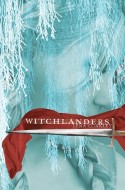
WITCHLANDERS, by Lena Coakley 
A high fantasy full of swords, snow monsters, and singing magic. Kirkus, School Library Journal, and Publisher's Weekly Starred Reviews. High in their mountain covens, red witches pray to the Goddess, protecting the Witchlands by throwing the bones and foretelling the future. It’s all a fake. At least, that’s what Ryder thinks. He doubts the witches really deserve their tithes—one quarter of all the crops his village can produce. And even if they can predict the future, what danger is there to foretell, now that his people’s old enemy, the Baen, has been defeated? But when a terrifying new magic threatens both his village and the coven, Ryder must confront the beautiful and silent witch who holds all the secrets. Everything he’s ever believed about witches, the Baen, magic and about himself will change, when he discovers that the prophecies he’s always scorned— Are about him.

CITY OF A THOUSAND DOLLS, by Miriam Foster
Nisha was abandoned at the gates of the City of a Thousand Dolls when she was just a child. Now sixteen, she lives on the grounds of the isolated estate, where orphan girls apprentice as musicians, healers, courtesans, and, if the rumors are true, assassins. Nisha makes her way as Matron’s assistant, her closest companions the mysterious cats that trail her shadow. Only when she begins a forbidden flirtation with the city’s handsome young courier does she let herself imagine a life outside the walls. Until one by one, girls around her start to die. Before she becomes the next victim, Nisha decides to uncover the secrets that surround the girls’ deaths. But by getting involved, Nisha jeopardizes not only her own future in the City of a Thousand Dolls—but her own life. 

 THE BINDING STONE, by Lisa Gail Green 
Tricked into slavery by the man she loved, the Djinni Leela has an eternity to regret her choices.

Awakened in the prison of her adolescent body, she finds a new master in possession of the opal that binds her. But seventeen-year-old Jered is unlike any she's seen. His kindness makes Leela yearn to trust again, to allow herself a glimmer of hope. 
Could Jered be strong enough to free her from the curse of the Binding Stone?


THE EMERALD TABLET, by PJ Hoover
Benjamin is different from other kids—he can read minds and use telekinesis. But it isn’t until he’s sent to summer school on a hidden, underwater continent that he learns the truth. 

It turns out, Benjamin isn’t really human at all—and the powers he thought made him special, just make him normal. But then the mysterious Emerald Tablet chooses him as its champion and he’s thrust into a mission to save the world.


Thanks for entering and see you tomorrow!

Monday, December 2, 2013

The Gift of Fantasy


 The fantasy that gave me the greatest gift was Lloyd Alexander’s Prydain series.  I was in first grade, and every few days I’d check out a stack of picture books limited only by the need to get my hands underneath it and my chin on top.  One day the school librarian handed me The Book of Three.

“I think you’d like this,” she said.

“I don’t know,” I said.  (Just like every kid in the universe confronting their first novel.)  “It’s awfully thick.”

“Give it a try.”  And she smiled.

So I opened that thick intimidating book and started to read, and fell into a real, long, dense story for the first time in my life.  I think I lived in Prydain more than I did in the real world for the next few years.  If Mrs. Burris had handed me some other book, a mystery for instance, I might not be a fantasy writer today.  Or even a writer today.  So that’s the fantasy that’s given me the greatest gift.  (And thanks to Mrs. Burris, too!)

                                                                        --Hilari Bell


From Elizabeth Bunce:

For me, it came about ten years ago when I read Sharon Shinn's ARCHANGEL for the first time. I had spent so many years reading To Learn the Craft, to soak up knowledge and study storytelling techniques, that reading had become more work for me than pleasure (although I didn't realize it at the time). I had lost sight of one of the most important things: Reading should be fun. But Archangel swept me away like no book had in years. I picked it up, dove in, and before I knew it, five chapters were past, and I REMEMBERED. Shinn brought back that sense of reading for pure delight that I had lost somewhere along the line. I've said that this is one of the most important lessons I've ever learned as a writer... but it's also the greatest gift: the reconnection to the experience of reading a great book for the pure joy of it. Thank you, ARCHANGEL!

From Erin Cashman:

For me, it was Lord of the Rings. I was having a hard time my freshman year in high school - 3 middle schools all joined together, and I found that my good friends were hanging out with another group of girls -- and one of the girls decided I was not welcome. One night I started reading Lord of the Rings, and instead of worrying or crying (as I had been doing every night) I completely forgot about my troubles and was swept up in the story. I read it straight through -- claiming a stomach ache and missing the next two days of school. For some reason, when I returned to school I didn't care that much anymore (maybe it was simply that a mean girl is not so scary when compared with the Nazgul!) and I sat at lunch with two girls I didn't know, who became good friends. I realized then the power of a good book - and the ability it has to transport the reader to a new world, away from the issues and problems of every day life. Lord of the Rings inspired me to
become a writer, and even to this day when I feel down, my escapism is often found in the pages of a fantasy novel.

From Dawn Metcalf:

I'd consider "starter" fantasy books like BRIDGE TO TERABITHIA by Katherine Paterson, PROTECTOR OF THE SMALL by Tamora Pierce, DRAGONSONG by Anne McCaffery and, of course, HARRY POTTER AND THE SORCERER'S STONE by J.K. Rowling can start a lifelong love of fantasy books!

For old folks like me, I love transportive, quirky and somewhat shadowy fantasy and I'd give THE NIGHT CIRCUS by Erin Morgenstern, THE DAUGHTER OF SMOKE & BONE by Laini Taylor, NEVERWHERE by Neil Gaiman or THE TIME TRAVELER'S WIFE by Audrey Niffenegger.

(And if kids are darker like me, then I'd probably wrap up a copy of HOWL'S MOVING CASTLE by Diana Wynne Jones, ARTEMIS FOWL by Eoin Colfer or our own William Alexander's GOBLIN SECRETS!)

From Pippa Bayliss:

I consider every fantasy novel I've ever read as a gift which isn't very helpful to you for your TOTW :) but what stands out as a particularly special novel to me was Roald Dahl's 'Charlie and the Great Glass Elevator'. It's the sequel to the better known 'Charlie and the Chocolate Factory' and an old dilapidated copy found its way into my hands. My son was a reluctant reader so I started reading it to him out loud at bedtime. He loved it. Even though it was so old and strange, it became one of his favorites., and he'd make me repeat any parts that involved the 'vicious knids' - no silent 'k'. Just the sound of k-nids made him laugh and that alone gave us both a gift that I'll always cherish.

From Will Alexander:

I don't know if this counts, since it isn't a fantasy novel, but my first thought is Lewis Hyde's The Gift: a book-sized essay about the role of art and the artist in society. It's made up of the same raw material as a fantasy novel, given that it's filled with folk and fairy tales, and it's a boon to any artist trying to sort out their own gifts and how best to use them. (Hyde's Trickster Makes This World is also very, very good, but given the focus on trickster figures that one commits gleeful theft rather than offering presents.)


Let me try again with an actual fantasy novel. When I took over reading bedtime stories to my youngest sister, we first picked up The Dark is Rising by Susan Cooper. That was a gift, I suppose. "I loved this, and I think you'll love it, so here. Let me read it to you." It utterly failed as a bedtime story, though. We didn't sleep at all. We just read straight through until dawn, and finished The Dark is Rising while the sun was rising.

From Ellen Booraem:

One marathon weekend in the dregs of high school, THE LORD OF THE RINGS opened a new world for me. And I don’t mean just Tolkien’s world of Middle Earth—I mean the universe of fantasy written for anyone older than ten. My parents weren’t fantasy readers, so up to that point my experiences with speculative fiction consisted of fairy tales, Pooh, and a couple of other books distinctly written for younger crowd. I had no idea that you could give up childish things and still read about dragons and elves. Imagine how the top of my head blew off when I met Bilbo. And Gandalf! In fact, I barely slept that weekend—read the entire trilogy, day and night, stopping only for meals and to exchange a word or two with my long-suffering parents. Thank you, Professor Tolkien.

So tell us, what fantasy story has been a “gift” to you?


Saturday, January 12, 2013

Happy Shameless New Year!!!

2012 was a banner year for the Inkpot - releases, awards, new book sales, critical acclaim.  How can we possibly top that?

Our bi-monthly shameless posts will show you!!!!

Case in point, or first shameless post of 2013 is just chuck full of awesomeness.  Don't believe me?  Take a look!

Starting off with a bang, featuring the cover release for Dawn Metcalf's INDELIBLE, he first in a new series from Harlequin Teen, which will hit shelves July 2013!


There's a new blog on the scene for 2013!  Lisa Amowitz, along with author Michelle McLean, has founded the new Scene 13 blog to showcase and highlight 2013 releases. In total there are 29 members including Inkies Lena Goldfinch, PJ Hoover, Ellen Booraem, Lisa Gail Green and Hilari Bell.

Speaking of Lisa Gail Green, she recently announced her 2013 debut THE BINDING STONE, the first in her Djinn series. Check back here for more updates!

We love collaborative Inkie efforts here in the Inkpot, so we're proud as punch about all the rave reviews for DIVERSE ENERGIES, a multicultural YA dystopian anthology featuring works by Cindy Pon and Ellen Oh.  Here are the latest reviews:

from VOYA:
Teen angst in the future makes for a very popular genre and this well-written collection should prove popular if promoted to the The Hunger Games or Divergent series crowd.

from Publisher's Weekly:
While there's not a single misfire in this anthology, particular works stand out. Ellen Oh's "The Last Day" takes place in a world torn apart by a decades-long war...and Cindy Pon's "Blue Skies" is almost painful in its longing for escape. Not only do these stories feature racially diverse casts, set all over the world or in space, some have gay and lesbian protagonists, giving readers plenty with which to identify.
Amazing!

More accolades for Anne Nesbet's THE CABINET OF EARTHS which appears on the Chicago Public Library's "Best of the Best" list for 2012 and is a Finalist for the 2012 Cybils award for Fantasy & Science Fiction (Middle Grade), along with Jennifer Nielsen's wonderful book, THE
FALSE PRINCE.

And to top it all off, Shannon Hale just put THE CABINET OF EARTHS on her list of "'Girl'
books that boys love"!

Which dovetails into our big finale here with perhaps the most exciting news of all. Paramount Pictures has announced it has contracted with Bryan Cogman, story editor for HBO's GAME OF THRONES series, to adapt the screenplay for Jennifer Nielsen's THE FALSE PRINCE.  HBO?  GAME OF THRONES?  OH MY GOD!!!!!!!!!!!!!!!!

See?  2013 is going to give 2012 a run for it's money...  :)

Monday, December 17, 2012

Wise advice is so last century—or is it?

In honor of the season, I thought we might talk about wise men in fantasy--the non-religious kind, otherwise known as mentors.  One of the first bits of advice given to new writers of YA, and even middle grade fiction, is that their kid protagonists not only have to solve the central story problem themselves, they need to do it pretty much on their own.  Wise adult advisers, who teach them what to do, get the same exasperated eye-roll from young reader that their parents do in real life.

And yet, the Mentor, who is pretty much the epitome of the wise adult advisor is a classic fantasy archetype—and if you’re going with the hero’s journey model, a necessary story element.  So how do modern fantasy writers, who write for modern teens, reconcile these two truths?

Personally, I’m not a huge advocate for the hero’s journey—and one of the reasons I’m not is that I don’t think the wise mentor is necessary in today’s fiction.  On the other hand, I have to say that model can still work fantastically well.  Up (which is one of the best stories I’ve seen in a very long time) is a classic hero’s journey—and the wise mentor in Up is Russell, the kid boy-scout.  I also have to admit that several of my own books have wise mentor figures.  I think the trick to making the wise mentor work, is to keep the mentor’s role entirely subordinate.  If the mentor offers wise advice and the protagonist simply accepts it and acts on it, that’s when the story fails.  If the mentor offers wise advice and the protagonist rejects or disregards it, and then goes on to discover his own truths for himself, then it’s OK if one of those truths is that the mentor wasn’t such an idiot after all.

So how do other fantasy writers feel about wise mentors?  An idea whose time has gone?  Or something that reflects a perennial human truth?  How do you use them?

Saturday, November 17, 2012

NATIONAL BOOK AWARD SHAMELESSNESS!!!

We're starting out with ridiculously exciting news!!!  This year's winner of the National Book Award for Young People's Literature is...

WILLIAM ALEXANDER 
for 
GOBLIN SECRETS!

Plus there's an amazing interview with Will in Publisher's Weekly.  We pretty much couldn't be more excited.  You should have seen the email chain that went through the Inkies group.  It was epic.

But that's not all the news we have today. The new YA edition of Lena Goldfinch's fantasy novella, THE LANGUAGE OF SOULS, is now available as an ebook (print forthcoming). And yes, there's a cover reveal!!!

Nancy Holder has accepted a position as writer in residence at Odyssey, a six-week intensive science fiction and fantasy workshop held at St. Anselm college in New Hampshire. The workshop runs from June 10-July 19, 2013.

She will also serve on the faculty at the Stonecoast MFA in Creative Writing Program at their campus in Dingle, Ireland, in July of 2013. For those of you who haven't been, the Dingle Peninsula is one of the most beautiful places in the world.  So yes, I'm ridiculously jealous.

Hilari Bell's first four novels have been re-released as ebooks! You can look for SONGS OF POWER, NAVOHAR, A MATTER OF PROFIT and THE WIZARD TEST, wherever ebooks are sold. And if you check out her Facebook page, you can get a Smashwords coupon to get any one of those books free.

And that's it!

"It."  WILL WON THE NATIONAL BOOK AWARD!!!!  *flails*

:)

Monday, July 9, 2012

The Price of Magic

I once found myself on a panel at an SF con, listening to a famous author talk about creating magical systems.  He said that magic always has to have some cost attached to it, in energy, in money, in years of study and meditation—something that kept it hard enough so that not just everyone could do it.  That it was important, in both the laws of physics terms and of creating good fiction, that magic not be “free.”  Being someone who is willing to argue (politely—honest!) with even famous authors, I pointed out that while I didn’t necessarily disagree with him—in fact, I was inclined to agree—in Harry Potter, magic is pretty much free.  You’re born with the ability to use magic, and while some training is required, it’s no harder than school is for everyone else—and let’s face it, Defense Against the Dark Arts is a lot more relevant than your average history class.  So it seems clear that you can write wildly successful fiction where magic has no cost. 

On the other hand, last year I read Daughter of Smoke and Bone.  And after I got over being blown away by the way Laini Taylor uses language, I was promptly blown away by her world building.  (Spoiler alert—and if you haven’t read this book already you really should!)  In the world of the chimaera and the seraphim the price of magic is pain.  This is about as far from free as you can get!  And if she’d just left it there, magic probably wouldn’t be common enough to matter very much, because hardly anyone would use it.  However, she went that one fantastic step further and made it so it didn’t have to be your pain that fueled the magic.  That one simple twist made the seraphims’ use of the chimaera as pain slaves almost inevitable, and the chimaera rebellion equally inevitable.  In fact, the entire war that has utterly shaped both those societies, and forms the core of the story in the way it divides the hero and heroine, springs completely from the horrifically high price placed on magic. 

Although Laini Taylor blew me away with the system she created, I have to admit, in my own books I’m usually closer to the J.K. Rowling model.  It’s not always exactly the same, but in my stories magic is usually some kind of natural force, that a person with a gift for it is somehow able to channel and shape to their will, though it usually requires study and practice. 

So how do you handle magic in your world?  Charge a high price, or give it away for free? And what kind of system do you prefer in the novels you read? 

Saturday, March 31, 2012

Shameless Trio

#1: Hilari Bell's TRAITOR'S SON has just been released by Houghton Mifflin. It's the sequel to TRICKSTER'S GIRL and it's getting rave reviews!!!


#2: Anna Staniszewski's MY VERY UNFAIRY TALE LIFE is reviewed in the May issue of Discovery Girls Magazine. They call it: "A funny, fast-paced novel of magical mayhem."


Also, the sequel, MY WAY TOO FAIRY TALE LIFE, has a tentative release date! The book is scheduled for a March 2013.  WOO HOO!!!!

#3: Cindy Pon is contributing to DIVERSE ENERGIES, a multicultural YA dystopian anthology that boasts, among others, Ursula Le Guin!  Look for it Fall 2012 from Tu Books!!!!

Wednesday, March 21, 2012

TRAITOR'S SON, AN INTERVIEW WITH HILARI BELL


This month I was so excited to get hold of an Advanced Reader's Copy of TRAITOR'S SON by our own Inkie - Hilari Bell! And even more to swipe the job of interviewing her about it! (Okay, it wasn't a swipe, more of a beg!)

TRAITOR'S SON is the second of THE RAVEN DUET books.


It's a great fast paced unputa-downable (yes, that's a real word), read, and it also stands alone, though you might want to rush out and read the first one afterwards! - I was busting with questions as soon as I finished it, so here goes...

Questions in bold - Answers in italics!

- TRAITOR'S SON has such a vivid sense of setting, it totally made me want to visit Alaska! I know you went to Alaska to research so I wonder...how long were you there? Did your trip change the plot in any way, or add things you'd never have imagined? I know I'm cheating here and pretending this is one question!

Alaska is amazing, and if you can do it you really should go! I was talking to my editor, who has also been there, and she said the first time she and her husband went there they were “stunned silent” by it’s beauty. If I had to pick two words to describe it, the first would be grandeur and the second unearthly. And because I was going for novel research (it’s good to be a writer!) I got to be in Alaska about 40 days—and we took about 12 days to get there, and the same back.

I actually planned the trip for research (and because I’d always wanted to go) but plotting Trickster’s Girl and Traitor’s Son as I traveled was one of the most fabulous writing experiences I’ve ever had. I knew roughly what would happen in the novels, but I’d drive around a curve and realize that this was where Kelsa would heal the lake ley, and Whittier, with it’s looming abandoned towers was where Jase’s final battle had to take place. And Musk Oxen worked their way into the story, and tree frogs, and the taiga wasn’t at all what I’d expected, and, and, and....

To drive the same roads, and visit the places where my story was taking place made it come alive for me in a way that SF and fantasy usually doesn’t. Don’t get me wrong, I love making up magical and alien worlds—but this experience was very different.

- Thanks Hilari, it definitely made me want to go to Alaska!

Of course I have to ask you about that amazing car - a Tesla no less! The details and the relationship between boy and car were so real, how did you do that?
Do you own a Tesla? Are you a secret girl racer? Did you collect toy cars as a kid? (like me?)


Photo, copyright The Tesla Society

Own a Tesla? Clearly you think writers make more money than they do! And I’m not independently wealthy, either. Nor am I a car fan, particularly. But the Tesla was the sexiest electric car I’d heard of, and I knew almost from the start of his character that Jase was a huge car fan—it’s part of him being a city kid, and so very divorced from his cultural heritage. I mentioned that it’s good to be a writer? There’s a Tesla dealership in Boulder, only about 50 miles from my house. My brother bet me they wouldn’t take a mere writer for a test ride—but I figured the worst they could do was say no, so I sent them an “I’m writing a book, and my protagonist drives...” email. They not only gave me a test ride, they answered weird writer questions like “What kind of magical spell could you cast on this car that would keep it from starting?” with a straight face. As for the ride itself...I may not be a secret girl racer, but the Tesla is a seriously cool car!

I might just have to write a character with a taste for classic Astin Martins next!

- I love the complexity of the story being set in the future but dealing with heredity, cultural expectations, breaking with that tradition and the consequences of those choices, especially as unusually you place the main character, Jason in-between an inter-generational row.
Did you always have that idea as the plot cornerstone, or did it creep up on you?

That idea, in a way, was the core of the novel right from the start. I’d seen the movie Eragon, and I have to confess I didn’t care for it—and maybe the book, which I haven’t read, is better. But in the movie the only character that really interested me was the son of the bad guy, who is himself a good guy and has a hard time convincing the other good guys that he won’t betray them. That was a wonderful conflict—so why not give it to a protagonist? The idea of a hero who was a villain’s son hung around in my head for a long time, till I started wondering what the core of my second Raven book could be—and it worked so perfectly, it made the whole story just fall into place.

- This is such a solid stand alone book, yet it is part of The Raven Duet. When you were working on TRICKSTER'S GIRL did you already know where the next book was headed? How much do you outline ahead?

As you may have gathered from some of my other comments, I’m a big outliner. Before I ever set off for Alaska, I knew that the museum break-in would happen in the Salt Lake City area, that the first ley healing would be in Craters of the Moon, that the bikers would start stalking Kelsa somewhere along the road, and that the climax would be her throwing the medicine pouch over the border. I also knew most of the bones of Traitor’s Son, that the core of the story would be the rift in his family, and that the final battle would take place in—and out—of the spirit world. That kind of thing.

- The dreamworld felt so real and compelling, I was truly worried Jason would get stuck! It reminded me so much of Aborigine dreamtime legend, it made me wonder where did you get your inspiration from, for such a richly dark alter-world? (I hope you noticed that was actually one question!)

The spirit world is loosely based on the dream/spirit worlds that appear in many, if not most, native cultures. It arose more from the Inuit myths than the Aborigine, but they’re all somewhat similar. And most of the details simply came from my own imagination. I have no idea, for instance, why Jase’s cell phone turned into a beetle and bit him before it flew off. In truth, I generally dislike dream worlds in stories, because there are no real consequences for what happens there—which to my mind pretty much kills suspense. So in my story’s spirit world, whatever happens to Jase there happens to his body back in the real world. If you’re hurt in the spirit world, those wounds are on your body when you wake up, and they heal in the normal way at normal speed. If you die there...you won’t be waking up. Ever.

Scary thought!

- It seems to me that mentors play an important role in this novel, particularly Jason's relationship with his father, grandfather, and grandmother. Where there any mentors that made a big impact in your life, either as a writer or in your childhood?

Not mentors per se. But I did have a good creative writing teacher back in middle school. When I came by at the end of the year to pick up my final story, he asked me if I’d ever considered becoming a writer. I said, “Are you kidding? Writers starve in garrets and get paid peanuts.” He laughed, and said I should consider it. And as you can tell, that conversation stuck with me. I sent him a copy of my first book—and tracking him down was interesting too. The school secretary asked me, “And what was his first name?” “I was in Junior High. His first name was Mister.”

- Finally, what are you reading right now?

Right this minute I’m re-reading an adult alternate history novel—Fortune’s Stroke, number four in the Belisarius series by Eric Flint and David Drake. But the best YA fantasy I’ve read recently—in fact, the best I’ve read in a long time—is Daughter of Smoke and Bone. I know I’m not the first to say it, but it’s a stunningly gorgeous novel. The writing just blows me away.

Thanks so much for hanging out with us, Hilari!

For those of you hoping to write your own brilliant YA novel - Hilari has a heap of really great tips and writing advice on her website, here, WRITING TIPS. I'm going there right now!

Monday, February 27, 2012

Goblins

Fantastical literature has given us many different versions of the roguish goblin, from Christina Rossetti's seductive fruit mongers to J.R.R. Tolkien's violent and villainous fighters, from the bankers of Gringotts to the glass-toothed critters chronicled by Spiderwick.

The following Inkies have all written books about goblins, and this is what they have to say:

What a fun thing to be able to compare my goblins with those of other Inkies! The goblins in my books are from The Underworld Chronicles and are primarily in Book 1, Elliot and the Goblin War. This book tells the story of how 11-year-old Elliot Penster becomes king of the brownies and accidentally launches an interspecies war with the goblins.

One of the wonderful things about using goblins as characters is that there is a lot of latitude in the “classic definition” of what a goblin should be. Generally speaking, a goblin is a twisted sort of fairy: smaller in size and grotesque in appearance. They’re not necessarily evil, but they are lazy, disorderly, and mean. They also tend to be troublemakers to humans, but can be appeased if the family leaves food out for them.

These were exactly the qualities I wanted as antagonists for Elliot and the Goblin War, but I did make some changes so that these goblins would be unique to this series.

Primarily, I wanted to give the goblins some magical abilities that would make them even more threatening to Elliot. In particular, they have two abilities. The first is they can scare other creatures to death. If Elliot is lucky, he’ll get away from a goblin attack only having been scared half to death.

The second goblin ability is in blowing things up. This is a definite departure from traditional mythology, but I added it because…well, it was funny.

As the series progresses, the goblins definitely evolve as characters and eventually learn to get along with Elliot. To be sure, they were some of the most fun mythological characters I got to play with throughout the stories.
Cover art by Gideon Kendall
I have to confess, I’m not really sure what a “classic” goblin is. My vague, personal definition is a small, not particularly pretty humanoid, with some form of magic. And more important than any of the above; not particularly good, either. If not outright evil, goblins should at least be mischievous. So when I wanted small, mischievous, neither good nor evil creatures to torment my heroine, befriend her, and ultimately be championed by her—well, goblins sounded like a good fit.

Of course, then I had to evolve my goblins to suit my story, with differing magical powers that defined what types of goblin they were, and a social order built on equal trades, with a horror of being indebted to anyone because that left you unequal, always owing the person you were indebted to. Though they soften this rule for friends and family, so that when favors were done for those close to you only a token needed to be paid in exchange. And that token could be anything—a pinecone, a pretty pebble, a button. Which is why, after my heroine became the general of the goblin’s army, she always wore a vest covered with loosely stitched buttons.
Cover art by Cliff Neilsen

The idea that goblins used to be human, and that they used to be children, has always stuck with me. I'm pretty sure that I first absorbed this piece of goblin lore from George MacDonald's The Princess and the Goblin, and David Bowie later reinforced it when he kidnapped a potential new goblin babe in Labyrinth. Wherever I got it, I still find it haunting. Goblins are the vampires and werewolves of childhood. They are the monsters that you might become.

My own goblins are likewise small humans transformed. Everyone knows that they steal children, but not everyone realizes that they are the children that they steal. They are also traveling actors, which fits the mischievous temperament that goblins always seem to have. My hero runs off with this theatrical goblin troupe, and he has to decide whether or not he can possibly trust them.
Cover art by Alexander Jansson