Showing posts with label Tiffany Trent. Show all posts

Wednesday, April 23, 2014

Interview with Tiffany Trent, Author of THE TINKER KING

We're thrilled to welcome Tiffany Trent back to the Inkpot today!  She's here to talk about her terrific new novel, THE TINKER KING, a sequel to her YA steampunk fantasy, THE UNNATURALISTS, which won a Green Earth Book Honor.  Both novels are a tantalizing blend of science and magic, set in a marvelously imagined world in which scientists are saints, fantastical creatures are real, and myth is a source of power.

To catch you up, here's a quick summary of THE TINKER KING:

After Vespa, Syrus, and Bayne defeated the Grue and restored order to their world in THE UNNATURALISTS, they thought their future was secure. Empress Olivia, committed to peace and equality for humans and Elementals alike, was a fair and just ruler. And the Creeping Waste had vanished, giving them hope for the first time.

But rebellion is brewing in the far-off city of Scientia, and dark Elementals are plotting war in the ruins of New London. Before they know what’s happening, Vespa, Syrus, and their friends are plunged into a new swamp of intrigue, deception and magic—and the cost of survival may be more than any of them are willing to pay.


And now on to the interview!

Delighted to have you on the Inkpot, Tiffany!  Did you originally plan to write a sequel to THE UNNATURALISTS?  Or did you have to figure it out as you went along?  

I had originally considered this as a potential trilogy, but then decided that I should focus more on making the books stand alone. I had other ideas about how this book would go that were ultimately thrown out, and for a long time, I stumbled over how to deal with the constraints the first book had given me while still challenging my characters (and readers!) with an engaging story. But I had to write a proposal to sell the book, so yes, there was a general plan.

It’s wonderful to see Syrus, the young Tinker in THE UNNATURALISTS, take a starring role in THE TINKER KING.   What was it like as a writer to revisit such a familiar character, and to take on the challenge of portraying his change and growth?

Syrus is really one of my favorite characters I've written. Though I have the least in common with him, I just genuinely like him. (Which cannot always be said of certain other characters I could mention. Ahem). I had to spend a lot of time figuring out a way to get inside his head and make him accessible to the reader in this book because transcribing his thoughts in a jumble of Chinese and English did not quite work out in the first pass of the book. And Vespa's voice is so strong that I had to be careful I didn't slip into her gear, so to speak, when I was in first person with Syrus. It actually helped to go back to the source and look at pictures of the person on whom Syrus is based and remember his demeanor -- very outwardly quiet and calm, but obviously filled with thoughts he daren't speak. Hopefully, it turned out OK!

I can assure you that it did!  In THE TINKER KING, Syrus and his friends face a truly terrifying antagonist: Ximu and her horde of xiren.  In creating them, how much did you draw on existing myths?  How much came from your own imagination?

Ximu is pretty much my own invention, except for her Chinese name. In China, spiders are considered lucky, so really I just flipped that idea on its head and decided to invent a Greater Elemental even more fearsome than the Grue, one who had been in Fairyland since the beginning of time. I suppose Ximu is somewhat the lovechild of Shelob and Jadis, but perhaps that's stretching things. (And in all fairness, I absolutely love spiders myself, so writing a nasty one was a bit hard for me). 

Sometimes fantasy can be very monocultural, but that can’t be said of THE TINKER KING.  I love how it deals squarely with cultural divides, including the cultural misunderstandings that can occur even among friends (as when Syrus slurps his soup to show appreciation for the cooking).  What advice do you have for writers – especially fantasy writers – who want to write more culturally sensitive stories?

Much as I've likely bumbled through two very gracious cultures--China and Japan--in the past, I'm certainly no expert. I try to live by the rule of being a good guest, whether I'm traveling or researching with an eye toward using something in a story. I very much want my work to honor the people who inspired it, so I try everything I can to make it clear that fair representation is the norm in my stories. And I never assume that my characters are all of one race or creed or sexual orientation. Even if I don't say so overtly, I assume a vast spectrum in the worlds I create and I try to leave enough room for the reader to join me in imagining these worlds in all their diversity.


Nikola Tesla (aka “St. Tesla”) is an important figure in your world.  He’s a fascinating man, and I’d love to know what drew you to put him in your books.

I suppose my reasoning was quite utilitarian. I needed someone who could make a rift in the space-time continuum, someone whose science generated serious voltage. Couldn't think of anyone better than Tesla. When I started researching him, he was a writer's dream come true -- a somewhat mad genius filled with visions of a world that still is largely the province of science fiction. If anything, I wish he could have played a greater role.


I'm all for that! I hope you end up writing about him again.

Steampunk has sometimes been accused of using the trappings of Victoriana but not examining the moral dilemmas of the period.  Do you think this is changing?  In THE TINKER KING, it’s clear that your characters know that luxury has a cost—one that often involves the exploitation of others—and for me that was a very powerful part of the book.

I think that is definitely changing. A lot of people are challenging the notion that Victoriana is the sole province of steampunk -- we know that many cultures had steam/clockwork-powered inventions long before the Victorians did. And many of the inventions we attribute to the Victorians really have their beginnings in Chinese, Indian, or Arabic culture. I wanted to make clear that the Victorians, while fascinating, caused a good deal of damage that we still haven't repaired.


Thanks so much for visiting us here at the Inkpot, Tiffany! We can't wait to see what you write next.

To learn more about Tiffany's books and stories, you can visit her website:  www.tiffanytrent.com 

***
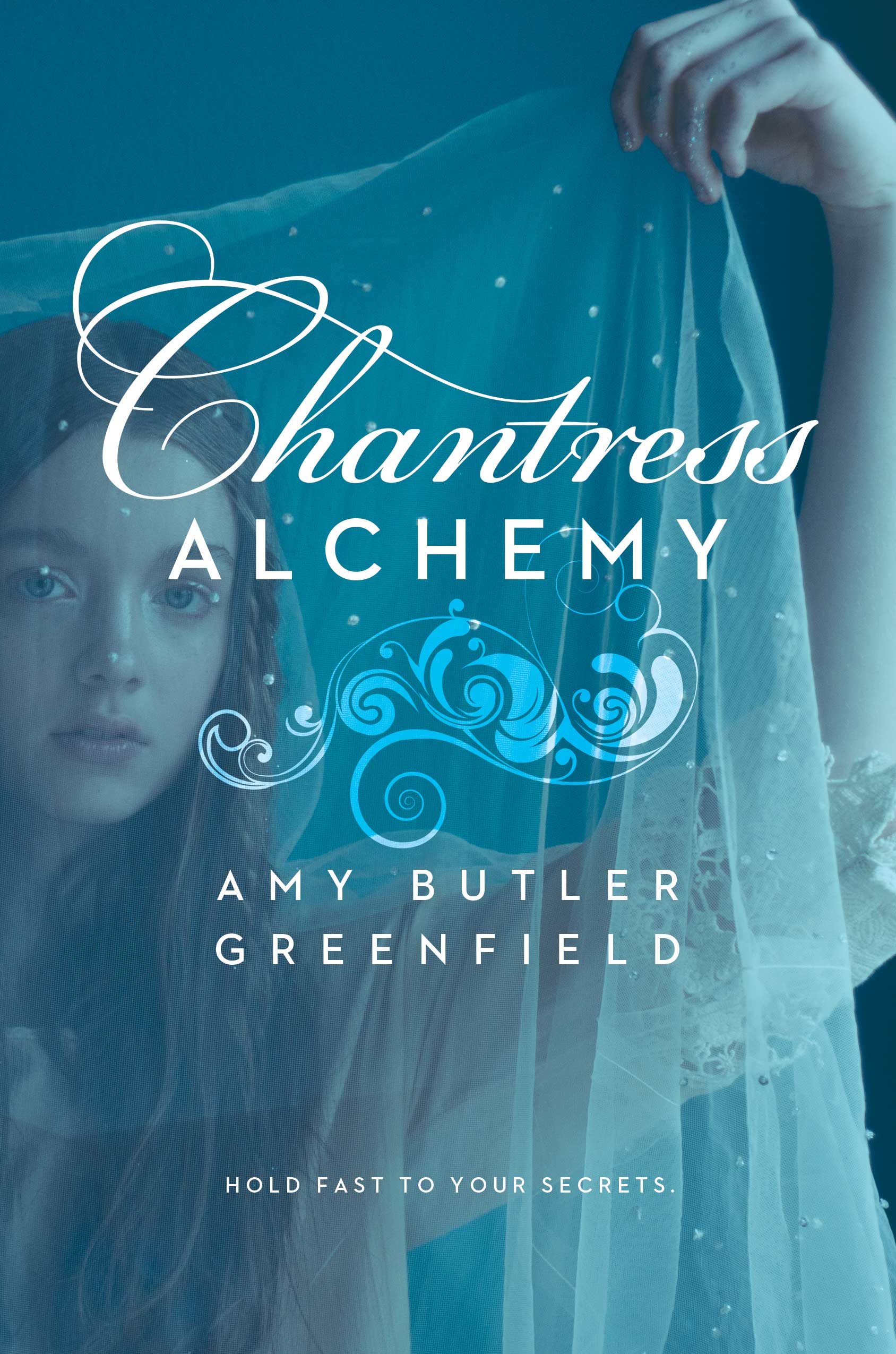


Amy Butler Greenfield was on her way to a history Ph.D. when she gave into temptation and became a novelist. Now an award-winning writer, she lives with her family in England, where she eats chocolate, bakes cakes, and plots mischief.  Her most recent book is the YA historical fantasy CHANTRESS (McElderry / S&S, 2013).  Its sequel, CHANTRESS ALCHEMY, comes out in May 2014. You can find her at www.amybutlergreenfield.com.


Wednesday, August 29, 2012

Interview with Tiffany Trent, author of The Unnaturalists


I’m thrilled to welcome Tiffany Trent to the Inkpot today to talk about her fabulous new YA steampunk fantasy, The Unnaturalists.

The author of the Hallowmere series, Tiffany already has many fans, but The Unnaturalists is sure to win her even more. Here’s the quick summary:

Vespa Nyx wants nothing more than to spend the rest of her life cataloging Unnatural creatures in her father’s museum, but as she gets older, the requirement to become a lady and find a husband is looming large. Syrus Reed’s Tinker family has always served and revered the Unnaturals from afar, but when his family is captured to be refinery slaves, he finds that his fate may be bound up with Vespa’s—and with the Unnaturals.

As the danger grows, Vespa and Syrus find themselves in a tightening web of deception and intrigue. At stake may be the fate of New London—and the world.

Welcome to the Inkpot, Tiffany!  What draws you to writing YA fantasy?  Can you tell us about your journey from the Hallowmere series to The Unnaturalists? 

It took writing an entire adult epic fantasy (unpublished) to realize that the books I’d always loved, the books I kept returning to, were considered young adult (juvenile) in my day.  The realization was a relief.  I wrote Hallowmere with that knowledge. And I wrote The Unnaturalists with an even deeper knowledge of what I loved and what I valued. For instance, I cannot seem to shake my love of complex and thorough world-building. While it may not matter to many, I’m nearly always thrown out of a story with shoddy world-building.  Which leads us to…

·         The Unnaturalists is set in a wonderfully imagined world where science is harnessing the power of myth.  The Litany of Evolution, the Night Emporium, a jam-eating sylphid, the “kobold on display at Miss Marmalade’s Seminary for Young Ladies of Quality” – there’s so much to relish here!  Can you tell us more about your process of world-building?  How much do you work out up front, and how much comes through the writing itself?  Are there any rules or principles you try to adhere to?

When I began writing The Unnaturalists, I knew it needed to be like nothing I’d ever written before. I spend a lot of time on my world-building; it’s really one of the most important and fun things about writing fantasy to me. I strive for rich, complex worlds that linger with the reader long after the book is closed. The world is always just as much a character to me as any person.   

Much of the world-building is discovered in the first draft. After that, I build the rules and decide how I’ll continue to shape things. Sometimes I’ll write little side stories or vignettes about various aspects of the world to help solidify those things in my mind. My biggest principle comes from Rod Serling: “Fantasy is the impossible made probable.” It’s my job to make you believe, even if only for a moment, that a city such as New London could exist. I do everything I can—from jam-eating sylphids to the Night Emporium—to help readers believe.

Your heroine, Vespa Nyx, has a delicious name and an unusual goal:  She wants to be the first female Pedant, so that she can catalog and study the Unnaturals just as men do.  Did anything in your own background influence that side of the story?  
 
A love of learning is one of the areas Vespa and I share. And I do have a deep and sublime love for museums; they’re beautiful, poignant, and terrifying all at once.  I also feel that women can be more than wives, if they so choose, and I like the Vespa embraces that in a time and place where such thinking really is dangerous and different.

How would you define the term “steampunk”?  In what ways would you like to see the genre develop?

Steampunk for me is very much about a past that never was and a future that might have been. I see it developing already into a rich, varied subgenre that stretches the boundaries set for it by writers like Jules Verne or H.G. Wells. While I’ve seen some writers say that it really has no future because it focuses so strongly on the past, I think the continued and growing interest in it suggests otherwise.

I really enjoyed reading about Syrus’s people, the Tinkers, and their relationship with the natural (and unnatural) world – and I was fascinated to learn that your time in the Sichuan highlands of China had a lot to do with that strand of the story.  Could you tell us more about your experiences there and how they influenced you?  

I went to live in Sichuan with my husband in the summer of 2005 in Tangjiahe Giant Panda Reserve. While there, we visited Wanglang Reserve at the edge of the Tibetan plateau, which is the ancestral home of the Baima people (aka the Duobo). They have many beautiful customs, among them patchwork dresses and clan belts woven on foot looms by the women. All the matrons wear a flat-topped hat with a chicken feather to commemorate the white rooster who woke them at dawn and saved them from an ambush by the Han Chinese centuries ago.  They give songs as welcome gifts; I still remember the song they sang for me about the green mountains of home when they learned that I came from beautiful mountains, too. 

I met with a shaman who was the last person able to read their sacred language and perform their rituals—that made me unutterably sad, that such a rich tradition will probably be forgotten by the current generation.  The land there was also wild and beautiful—steaming streams winding through fields of electric flowers on the glacial plateau, the whisper of pandas passing through bamboo cloud forests, mineral pools so brilliant blue and green you’d think they were made of gems rather than water.  I could well imagine the door to another world in a place like that. The Tinkers were definitely a result of that all too brief visit.  

You won the 2008 SCBWI Work-in-Progress Travel Grant and used it to travel to England.  How did that trip help shape the book?

I was actually researching a different book about Darwin then, though I’d already written The Unnaturalists the previous year, had gotten a new agent, and had received my first round of rejections by the trip.  I decided that maybe the trip could serve as double-duty for both books, since they seemed closely aligned in many ways.  Very glad I was right!  I spent lots of time in the British Museum of Natural History and also visited Down House, where Darwin and his wife Emma settled after their marriage.  It also helped to visit the Victoria and Albert Museum, because while I knew I wanted many Victorian elements, I certainly also wanted Baroque. Walking into a fully-appointed Baroque-era room was such perfect inspiration!

It sounds like that Travel Grant went to just the right person.  Congratulations!  Now for a more general question: What do you love best – writing the first draft or revising?  Any tips on either one?

Honestly, I waffle between these two a great deal. I love it when I’m really in the story and the words just fly out during first drafting.  That used to be my favorite part and I really used to hate revising. On the other hand, there is nothing worse than trying to craft the perfect opening for months and feeling like nothing is coming.  These days, I think I enjoy revising more, because I like having the raw lump of clay of the first or second (or third or fourth) draft and seeing it take shape.

The Unnaturalists works beautifully as a stand-alone novel, but it’s thrilling to hear there’s going to be a sequel!  What can you tell us about it?

The second book (which is still untitled) has Syrus and Vespa as its main characters, but focuses on Syrus. That isn’t to say Vespa’s journey here won’t be important, but Syrus is in the foreground. And we’ll learn a bit more about Bayne’s family, too. And Olivia’s. J  So many secrets I can’t tell!! 

That sounds exciting!  Thanks so much for stopping by, Tiffany.  

You can read more about The Unnaturalists on Tiffany’s website:  http://www.tiffanytrent.com/


***


Amy Butler Greenfield was a grad student in history when she gave into temptation and became a novelist. She loves music, romantic adventure, strange science, alternate history, and twisty plots, which explains how she came to write her first YA novel, Chantress, due out from Simon & Schuster in 2013. You can visit her at www.amybutlergreenfield.com.