Showing posts with label Amy Butler Greenfield. Show all posts

Sunday, April 27, 2014

Shameless Weekend!!!

I really should just change the name of this post to "SHAMELESS DAYS THAT START WITH 'S'" since the number of times I don't get to it until Sunday is growing exponentially.

Don't judge me.  :D

I'm here now!  And I have fabulous Inkie news to share!!!!

The cover for Book Two of Dawn Metcalf's the Twixt, INVISIBLE is now live!  AND AWESOME!


I do so love a cover reveal.

Inkie Katherine Catmull and her co-authors Stefan Bachmann, Claire Legrand, and Emma Trevayne won a Kirkus star for their collection of scary middle-grade short-short stories, THE CABINET OF CURIOSITIES: 36 TALES BRIEF AND SINISTER, out May 27.

Kate Milford has two pieces of news.  1) The Kickstarter campaign for her short novel, BLUECROWNE, was successful and was funded! It'll be completed and published in May. The info on the campaign is here, with instructions for preordering the book.

2) GREENGLASS HOUSE, which comes out from Clarion in August, just received its first official review and a star from Booklist. It was called:
"an enchanting, empowering, and cozy read." 
Which I think means you should buy it.

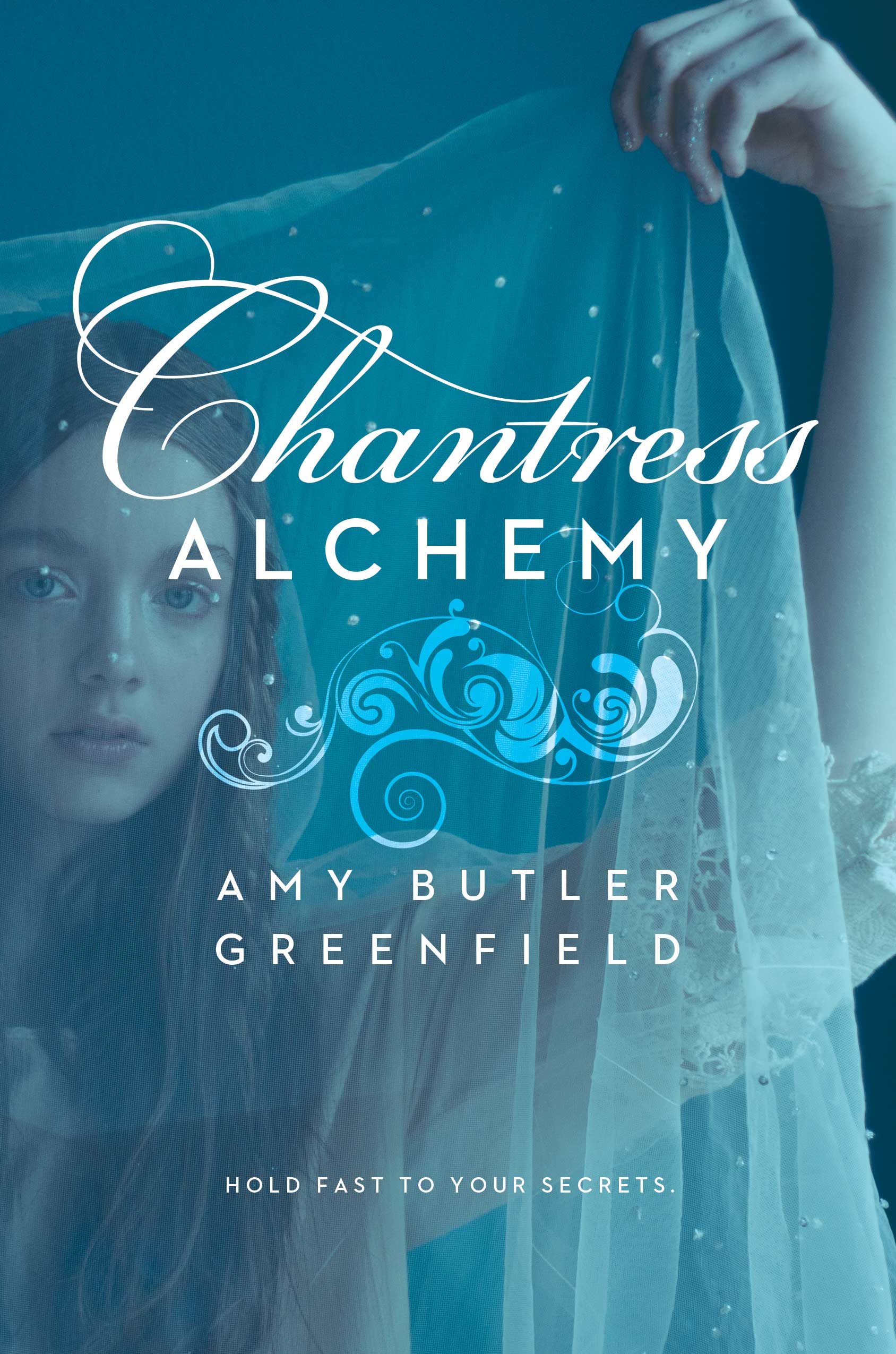
And last but not least, the trailer for Amy Butler Greenfield's CHANTRESS ALCHEMY was released this week!  Amy did the reveal on Thursday over at Mundie Moms, where there’s a final copy giveaway, which you should definitely check out.  CHANTRESS ALCHEMY comes out May 6th.

Wednesday, April 23, 2014

Interview with Tiffany Trent, Author of THE TINKER KING

We're thrilled to welcome Tiffany Trent back to the Inkpot today!  She's here to talk about her terrific new novel, THE TINKER KING, a sequel to her YA steampunk fantasy, THE UNNATURALISTS, which won a Green Earth Book Honor.  Both novels are a tantalizing blend of science and magic, set in a marvelously imagined world in which scientists are saints, fantastical creatures are real, and myth is a source of power.

To catch you up, here's a quick summary of THE TINKER KING:

After Vespa, Syrus, and Bayne defeated the Grue and restored order to their world in THE UNNATURALISTS, they thought their future was secure. Empress Olivia, committed to peace and equality for humans and Elementals alike, was a fair and just ruler. And the Creeping Waste had vanished, giving them hope for the first time.

But rebellion is brewing in the far-off city of Scientia, and dark Elementals are plotting war in the ruins of New London. Before they know what’s happening, Vespa, Syrus, and their friends are plunged into a new swamp of intrigue, deception and magic—and the cost of survival may be more than any of them are willing to pay.


And now on to the interview!

Delighted to have you on the Inkpot, Tiffany!  Did you originally plan to write a sequel to THE UNNATURALISTS?  Or did you have to figure it out as you went along?  

I had originally considered this as a potential trilogy, but then decided that I should focus more on making the books stand alone. I had other ideas about how this book would go that were ultimately thrown out, and for a long time, I stumbled over how to deal with the constraints the first book had given me while still challenging my characters (and readers!) with an engaging story. But I had to write a proposal to sell the book, so yes, there was a general plan.

It’s wonderful to see Syrus, the young Tinker in THE UNNATURALISTS, take a starring role in THE TINKER KING.   What was it like as a writer to revisit such a familiar character, and to take on the challenge of portraying his change and growth?

Syrus is really one of my favorite characters I've written. Though I have the least in common with him, I just genuinely like him. (Which cannot always be said of certain other characters I could mention. Ahem). I had to spend a lot of time figuring out a way to get inside his head and make him accessible to the reader in this book because transcribing his thoughts in a jumble of Chinese and English did not quite work out in the first pass of the book. And Vespa's voice is so strong that I had to be careful I didn't slip into her gear, so to speak, when I was in first person with Syrus. It actually helped to go back to the source and look at pictures of the person on whom Syrus is based and remember his demeanor -- very outwardly quiet and calm, but obviously filled with thoughts he daren't speak. Hopefully, it turned out OK!

I can assure you that it did!  In THE TINKER KING, Syrus and his friends face a truly terrifying antagonist: Ximu and her horde of xiren.  In creating them, how much did you draw on existing myths?  How much came from your own imagination?

Ximu is pretty much my own invention, except for her Chinese name. In China, spiders are considered lucky, so really I just flipped that idea on its head and decided to invent a Greater Elemental even more fearsome than the Grue, one who had been in Fairyland since the beginning of time. I suppose Ximu is somewhat the lovechild of Shelob and Jadis, but perhaps that's stretching things. (And in all fairness, I absolutely love spiders myself, so writing a nasty one was a bit hard for me). 

Sometimes fantasy can be very monocultural, but that can’t be said of THE TINKER KING.  I love how it deals squarely with cultural divides, including the cultural misunderstandings that can occur even among friends (as when Syrus slurps his soup to show appreciation for the cooking).  What advice do you have for writers – especially fantasy writers – who want to write more culturally sensitive stories?

Much as I've likely bumbled through two very gracious cultures--China and Japan--in the past, I'm certainly no expert. I try to live by the rule of being a good guest, whether I'm traveling or researching with an eye toward using something in a story. I very much want my work to honor the people who inspired it, so I try everything I can to make it clear that fair representation is the norm in my stories. And I never assume that my characters are all of one race or creed or sexual orientation. Even if I don't say so overtly, I assume a vast spectrum in the worlds I create and I try to leave enough room for the reader to join me in imagining these worlds in all their diversity.


Nikola Tesla (aka “St. Tesla”) is an important figure in your world.  He’s a fascinating man, and I’d love to know what drew you to put him in your books.

I suppose my reasoning was quite utilitarian. I needed someone who could make a rift in the space-time continuum, someone whose science generated serious voltage. Couldn't think of anyone better than Tesla. When I started researching him, he was a writer's dream come true -- a somewhat mad genius filled with visions of a world that still is largely the province of science fiction. If anything, I wish he could have played a greater role.


I'm all for that! I hope you end up writing about him again.

Steampunk has sometimes been accused of using the trappings of Victoriana but not examining the moral dilemmas of the period.  Do you think this is changing?  In THE TINKER KING, it’s clear that your characters know that luxury has a cost—one that often involves the exploitation of others—and for me that was a very powerful part of the book.

I think that is definitely changing. A lot of people are challenging the notion that Victoriana is the sole province of steampunk -- we know that many cultures had steam/clockwork-powered inventions long before the Victorians did. And many of the inventions we attribute to the Victorians really have their beginnings in Chinese, Indian, or Arabic culture. I wanted to make clear that the Victorians, while fascinating, caused a good deal of damage that we still haven't repaired.


Thanks so much for visiting us here at the Inkpot, Tiffany! We can't wait to see what you write next.

To learn more about Tiffany's books and stories, you can visit her website:  www.tiffanytrent.com 

***


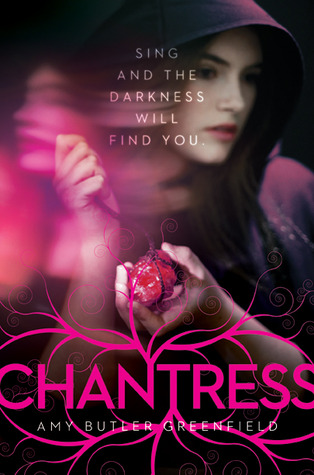
Amy Butler Greenfield was on her way to a history Ph.D. when she gave into temptation and became a novelist. Now an award-winning writer, she lives with her family in England, where she eats chocolate, bakes cakes, and plots mischief.  Her most recent book is the YA historical fantasy CHANTRESS (McElderry / S&S, 2013).  Its sequel, CHANTRESS ALCHEMY, comes out in May 2014. You can find her at www.amybutlergreenfield.com.


Monday, September 23, 2013

Guess the MG & YA Fantasy Book Covers: Back-to-School Style

It’s September – the month of back-to-school, shiny apples, and changing leaves… and a new round of Guess the Fantasy Book Covers!

As with our first round back in June, the author names and titles have been cleverly edited out of these MG and YA book jackets.  Do you have what it takes to identify them anyway?

You get one point for the correct title and another for the correct author. Books span the years from 1959 to 2013, and we use the first hardcover edition whenever possible (and, Lena says, with some exceptions! :)).

Ready? Pick up your pencils and begin!

Scoring system:

0-7 points:  Time to hit the books and do some extra-hours study.
8-13 points:  You’ve earned an E for effort.  A few more pop quizzes and you’ll be up to speed.
14-19 points:  Go to the head of the class!  You get all the stars.
20 points:  Good heavens – you must be the teacher!

Answers at the bottom!

1.

2.

3.

4.

5.

6.

7.

8.

9.

10.

As before, this post was a tag-team effort between me, Lena Goldfinch, and the wonderful Amy Greenfield. We had so much fun putting it together, we're tossing around the idea of doing it again!

Confession, I'm to blame for stripping these beautiful books of their titles & author names, with sincere apologies to book designers everywhere, and Amy deserves the credit for scouting out a fabulous selection of book covers for me to choose from & for introducing our game.

Here's a little more about us and a look at our own book covers stripped of their titles & author names – just for fun.

AMY BUTLER GREENFIELD was on her way to a history PhD when she gave into temptation and became a novelist. She loves music, romantic adventure, alternate history, and twisty plots, which explains how she came to write her first YA novel, Chantress (McElderry/S&S, May 2013).


LENA GOLDFINCH writes young adult fantasy with a healthy dose of "sigh-worthy" romance. In her creative heart, she loves travelling to all sorts of exciting places, past and present, a perk of making things up for a living. Her upcoming release, HAUNTING JOY: a ghostly little story, makes its first spectral appearance on October 20,2013.


Wednesday, July 31, 2013

Interview with Susan Fletcher, Author of FALCON IN THE GLASS


I’m delighted to welcome Susan Fletcher to the Inkpot today, to talk about obsession, persistence, craft, and her new middle-grade novel, FALCON IN THE GLASS (McElderry / S&S, July 2013).

The award-winning author of SHADOW SPINNER, ALPHABET OF DREAMS, and many other books, Susan also teaches in the Vermont College MFA program. Everything I’ve ever read by Susan is beautifully written, and FALCON IN THE GLASS, set in Renaissance Venice, is no exception.  Here’s a summary of the action:

In Venice in 1487, the secrets of glassblowing are guarded jealously. Renzo, a twelve-year-old laborer in a glassworks, has just a few months to prepare for a test of his abilities, and no one to teach him. If he passes, he will qualify as a skilled glassblower. If he fails, he will be expelled from the glassworks. Becoming a glassblower is his murdered father’s dying wish for him, and the means of supporting his mother and sister. But Renzo desperately needs another pair of hands to help him turn the glass as he practices at night.

One night he is disturbed by a bird—a small falcon—that seems to belong to a girl hiding in the glassworks. Soon Renzo learns about her and others like her—the bird people, who can communicate with birds and are condemned as witches. He tries to get her to help him and discovers that she comes with baggage: ten hungry bird-kenning children who desperately need his aid. Caught between devotion to his family and his art and protecting a group of outcast children, Renzo struggles for a solution that will keep everyone safe in this atmospheric adventure.

 
Renaissance Venice and Murano come alive in FALCON IN THE GLASS, richly present in everything from the ferocity of the guilds to the smell of wood smoke and tar.  What inspired you to set a story there?

            Obsession. Well, it wasn’t a throw-it-all-away-and-join-the-circus kind of obsession, but ever since I saw a documentary on Venice many years ago, I’ve been dying to explore it both in person and through story.  What is it about Venice? I think it’s partly that it’s so stunningly beautiful, and when you wander through those old streets and canals you can almost imagine that the 21st century has dropped away and you’re living in the 15th century or before. And it’s also partly that Venice is, you know, sinking, and there’s this awareness that it’s not going to be around forever. And I think this sort of connects on a deep level to the sinkingness of everything beautiful in life. Wait! I mean, I don’t want to be maudlin but…  Everything beautiful is temporary, yes? And that’s part of what makes it so precious. And Venice reminds me of this in a piercing way that has haunted me for years.   

The “bird people” in FALCON IN THE GLASS fascinated me.  Their relationship with birds was eerie and magical, yet wholly believable.  Did you draw on existing legends to shape this, or did you strike out and create your own mythology? 

            Oh, I’m so glad you liked those guys! The bird people came out of my Dragon Chronicles series; in those books, people who can speak telepathically with dragons can also “ken” with birds. In my last book, Ancient, Strange and Lovely, I brought the bird people into an alternate 21st century. I began to wonder what the bird people had been doing all this time.  They’re different, so definitely they would have provoked fear and rage. That’s just what happens historically to people who are perceived as different.  Maybe they would have been forced to move from one place to another. Also, there’s a kind of neither-here-neither-thereness to the magic of the bird people. I mean, there are horse whisperers in real life; why couldn’t there be, like, bird whisperers, too?  One of the things that makes me want to spend time in my imagination with the bird people is that I can almost believe they might exist for real.

Craft and artistry play a big role in this book and in the life of the young apprentice Renzo.  Midway through, you write that Renzo reaches a point where he “no longer strove to master the glass but only to know it, to play.”  How does this idea of play resonate for you as a writer?

            Some people say you should write what you know, a piece of advice I flagrantly disregard at every opportunity. Well, okay, that was flip, and not entirely accurate. But I am often attracted to write about things I don’t know much about; I find out about them in the process of writing and research. However, it occurred to me that I spend the bulk of my days thinking about, teaching about, writing about, and in the act of attempting to create something original and harmonious. And that it might be interesting to try to write about that.
            For me, finishing a novel requires a kind of dogged persistence. It’s a long process requiring a suite of hard-won skills. But when I approach a book with a sort of grit-your-teeth determination, I can crush all the life out of it. My best writing comes when I lighten up and approach it in a spirit of play. For me, writing a novel is a delicate balancing act of craft, persistence, passion, and joy. And I imagine that this is true of other art forms, too.

As well as being a writer, you teach writing, too.  Has teaching changed the way you work as a writer?  Did it affect the way you saw the master/apprentice relationships in the book?

            I’m not sure that teaching has changed the way I write, but it has forced me to be more conscious about things I used to do by the seat of my pants. How do we know when there’s too much exposition, or when subplots are overshadowing the main plot? I’ve had to sit down and really think about stuff like that. Because of teaching, I have more experiences of seeing writers grappling with and transcending a difficult problem; I can sometimes borrow my students’ energy and hope and bring it to my own work. I’ve learned so much from my students. And from my colleagues at Vermont College, who are scary-smart and wise in the ways of art-making. 
            But I love your question about the master/apprentice relationships. As I wrote FALCON IN THE GLASS, I was thinking about this relationship only from the apprentice’s point of view, seeing it through Renzo’s eyes. So what does the book (inadvertently) say about mentors?  Well, Renzo is hungry to learn, as are many of my students. He gets bored with repetitive lessons. His love of the art originated with a nurturing mentor (his father) but the stress of an impossible challenge posed by an unsympathetic mentor forces him to create something entirely original. Hmm! Maybe what I’ve said (without thinking consciously about it) is that a hungry student can thrive despite his mentor’s personal style? That a nurturing mentor and one who poses seemingly impossible challenges can both be beneficial?

FALCON IN THE GLASS is filled with wonderful historical details—from the tools of the glassmaking trade to the Bocca di Leone, the Lion’s Mouth through which Venetians could accuse someone of heresy or witchcraft.  Can you share any tips about historical research?  How to do it well, and how to keeping it from overwhelming the story?

            I’m not an expert on historical research. Fortunately, I know how to find experts! A number of wonderful librarians helped me unearth the information I needed, including those at Vermont College, who, through interlibrary loan, have access to an array of books and articles that seems just about unlimited. 
            Also, there’s this whole serendipity thing, which I have heard other writers speak of as well. Sometimes when I’m casting about for someone who knows a lot about my subject matter, things just click into place in ways that seem almost miraculous. It happened to me again with FALCON IN THE GLASS. One example: A writer friend, Emily Whitman, mentioned to me that Patricia Fortini Brown, a Princeton professor and expert on Renaissance Venice, would be speaking at a local college in a few days.  I went to the lecture and introduced myself; Dr. Brown offered to vet my manuscript and answer questions. Her generosity knocked me out—and she was a huge help in confirming details and digging out little-known information.
            Yes, research is delicious, and it’s such a temptation to put in every cool fact I’ve discovered! And it’s also true that a detail, like a Bocca di Leone, can inspire an entire scene. But I try to put in only what my viewpoint characters would plausibly notice in the moment, and let the rest of it fall away.


Excellent advice!  I'm curious:  Are you an outliner?  Or do you like to see where the story takes you?

            Usually I’m not an outliner, but FALCON IN THE GLASS was an exception. I had taken a screenwriting class from my friend Cynthia Whitcomb, and she had demonstrated a technique of outlining an entire screenplay in advance. I thought, Hmm, I wonder… To my surprise, in a couple of weeks I had the outline of this novel. Even more surprising—the outline held up until I was about ¾ of the way through the first draft. I found that I didn’t mind knowing in advance generally where I was going. There were enough surprises along the way to keep me exploring. The next book is perking along without an outline, so I don’t know when I’ll try Cynthia’s method again.

Falcon in the Glass is a wonderfully original blend of history and fantasy for middle-grade readers.  What draws you to write for this age group?  What is it about the combination of fantasy and history that appeals to you?

            The worst year in my life was the year I turned fourteen.
            Most of my protagonists are fourteen or fifteen years old.
            Coincidence? Don’t think so. But the connection is not deliberate. I just want to write about kids that age.
            Sometimes I wonder if subconsciously I’m just trying to get fourteen right. Kind of like the movie Groundhog Day, where the Bill Murray character has to keep living the same day over and over until he stops making a total hash of it.
            I can’t go back and actually be fourteen. So maybe I have to do this, instead.
            As to the fact that FALCON IN THE GLASS lives in the borderland between historical fiction and fantasy…  I have always been attracted to the long ago and faraway. Can’t tell you exactly why.  And I love books with a little bit of maybe-magic. The kind of magic that wicks across the boundary between reality and imagination, suggesting there’s more to this world than meets the eye.

"Maybe-magic" is a beautiful way of describing it.  Thank you so much for stopping by the Inkpot today, Susan!


                                                                           ***

Interview conducted by Amy Butler Greenfield, who was on her way to a history Ph.D. when she gave into temptation and became a novelist. Her most recent book is the YA historical fantasy CHANTRESS (McElderry / S&S, 2013).  She lives with her family in England, where she eats chocolate, bakes cakes, and plots mischief.

Monday, June 17, 2013

Can You Guess These Popular Fantasy Books from their Covers?

Here at the Inkpot we’re fans of the Guess the Phantom Book Covers game over at PWxyz. Today we thought we’d do our own variation, using MG and YA fantasy book covers from the past 50 years.

As you can see, the author names and titles have vanished. Are you clever enough to identify the books anyway?

Super bonus points to the cover aces who can name them all – and extra twinkly gold stars if you know the pub years, too!

Answers at the bottom!

Book 1

Book 2

Book 3

Book 4

Book 5

Book 6

Book 7

Book 8

Book 9

Book 10

Today's post was a tag-team effort between me, Lena Goldfinch, and the wonderful Amy Greenfield. We had so much fun putting it together, we're tossing around the idea of doing it again!

Confession, I'm to blame for stripping these beautiful books of their titles & author names, with sincere apologies to book designers everywhere, and Amy deserves the credit for scouting out a fabulous selection of book covers for me to choose from & for introducing our game.

Here's a little more about us and a look at our own book covers stripped of their titles & author names – just for fun.

AMY BUTLER GREENFIELD was on her way to a history PhD when she gave into temptation and became a novelist. She loves music, romantic adventure, alternate history, and twisty plots, which explains how she came to write her first YA novel, CHANTRESS(McElderry/S&S, May 2013).


LENA GOLDFINCH writes young adult fantasy with a healthy dose of "sigh-worthy" romance. In her creative heart, she loves travelling to all sorts of exciting places, past and present, a perk of making things up for a living. Her new release, SONGSTONE, comes out in July 2013.


Saturday, May 25, 2013

Embarrassed by the Shamelessness

So apparently its been like a month since I did a Shameless Saturday post. WHAT IS WRONG WITH ME?  I swear I'm losing my marbles, on deadline for this new book.

Whatever.  I'm here now, right?  DOESN'T THAT COUNT FOR SOMETHING???

On with it.

Book Expo America 2013 is rapidly approaching, and several Inkies will be in attendance. Lisa Amowitz will be signing BREAKING GLASS at the Spencer Hill Pres booth #2567 on Thursday, May 30th at 9:00am.  Dawn Metcalf will be stopping by the Harlequin Teen booth #1238 on Thursday, May 30th.  Amy Butler Greenfield will be at Simon & Schuster's blogger preview party Tuesday night, May 28th.  And I will be signing copies of 3:59 at Table 12 in the autographing area Thursday, May 30th at 10:30am.  Yeah, BEA is going to be nuts!

We've got a cover reveal!!!

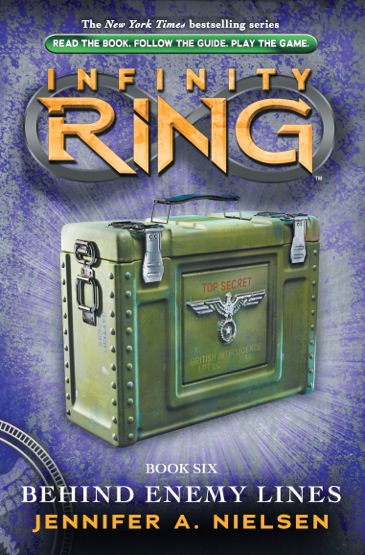
The cover and title for the sixth book in Scholastic's INFINITY RING series has been released. BEHIND ENEMY LINES by Jennifer Nielsen, takes our heroes, Dak, Sera, and Riq into the heart of World War 2 where they must help the allies succeed with a most dangerous spy plan that will either chance the course of the war, or else destroy any hope for victory and freedom. It will be released on November 26, 2013.  Wanna see?


In addition, Jennifer's THE FALSE PRINCE is a double 2013 Whitney Award winner for Best Middle Grade Book of 2013 and also Best Overall Youth Book of 2013. In addition, it is a nominated title for Yalsa's Teens' Top Ten books!  Phew.  That's a lot of news!!!!

Speaking of awards, both THE CABINET OF EARTHS by Anne Nesbet and THE EXCEPTIONALS by Erin Cashman are on the Bankstreet Best Children's Books of the Year list, 2013 edition! Plus, Lena Coakley's Witchlanders was named an Honour Book for Canada's White Pine Award at the Forest of Trees, Festival of Reading, Canada's largest children's literature festival. And Goodreads named Amy Butler Greenfield's CHANTRESS one of its top 6 "Movers and Shakers" for May YA releases. Plus there's a swag and finished copy giveaway running at thoughtsandroses.blogspot.com this week.

We've got some great news for brand news books here at the Inkpot. Ellen Booraem’s TEXTING THE UNDERWORLD, due out in August, got its first journal review—and it has a star attached! Noting that the book has death as its major theme, Kirkus Reviews said:
“Booraem applies a light touch to her heavy subject . . . . But she doesn’t avoid staring death in the face, saddling her likably unlikely hero with an agonizing decision that, though framed in fantasy, is all too gut-punchingly real. Like Conor, readers will emerge from this adventure a little better equipped for heroism.”
Makes me want to snatch it up!

On the announcement side of things, new Inkie Katherine Catmull and three other middle-grade authors, Stefan Bachmann, Claire Legrand, and Emma Trevayne, have been posting creepy/spooky/unnerving short-short pieces at EntertheCabinet.com since January 1. This week Greenwillow Books (HarperCollins) announced that they will publish a collection of the stories, tentatively titled THE CABINET OF CURIOSITIES, in summer 2014.

And on the debut side of things, Lisa Gail Green's THE BINDING STONE (the first book in the Djinn series) is now available on Amazon!

Lisa also has amazing blurbs from both Nancy Holder and Lisa Desrochers!
"I dream of Lisa Gail Green! The Binding Stone is magical in so many ways. My Djinn asks for my third wish? The sequel, of course!" - NYT bestselling author Nancy Holder

"Genies like you’ve never seen them, THE BINDING STONE is a wild ride of treachery and deception. For my first wish, I’d like a sequel, please." - PERSONAL DEMONS author Lisa Desrochers
Rock on.

See what happens when I forget to post?  Things get crazy.