Showing posts with label Author_Interview. Show all posts

Wednesday, October 1, 2014

INTERVIEW WITH SANDRA WAUGH AUTHOR OF LARK RISING

Lark has foreseen two things—she will fall for a young man with sage green eyes, and he will kill her.

Sixteen-year-old Lark Carew is happiest close to home, tending her garden and gathering herbs for medicines. But when her Sight warns her that monsters called Troths will soon invade her village, Lark is summoned on a journey to seek help from the legendary Riders of Tarnec. Little does she suspect that one of the Riders, Gharain, is the very man who has haunted her visions. Or that the people of Tarnec have called her there for another reason: Lark is the Guardian of Life, the first of four Guardians who must awaken their powers to recover four stolen amulets. Together, the amulets—Life, Death, Dark, and Light—keep the world in Balance. To take back the Life amulet, Lark will have to discover her true inner strength and give in to a love that she swears will be her downfall. (From Goodreads)


And now, it is my great pleasure to introduce my fellow inkpot member, the immensely talented Sandra Waugh!

As you know, I loved LARK RISING! How did you come up with such an interesting and fresh premise?  
That a hawk stopped by on my porch one morning is old news by now, but truly—that was what that tied together loose threads of a story I’d been trying to understand. I sat down and wrote the first pages based on that brief moment and the rest followed, fleshed out over many, many lawnmowings (I think it’s also old news that I work out my stories while mowing the lawn!).  I followed a classic fantasy trajectory but hopefully (as you say!) from a fresh perspective.  It follows from all that mowing that so much of the story is about Nature and the fragility of Balance.

I work out most of my stories walking my dog, so I totally understand that!  Your fantasy world is so unique. I loved Lark’s connection to the earth and all of her creatures.  The world was both achingly beautiful, and at times, terrifying.  Can you describe your world building for us?
 It’s just past my doorstep.  I live in an old house with about four acres of grass and garden and woods—it’s my job (beyond just lawnmowing) to try and hold back the wilderness. It’s basically impossible. But even so, I kind of love the challenge because it has brought me up close and personal with my surroundings on a daily basis. I’ve watched Nature struggle and thrive, and some of the most beautiful moments—the first spring crocus, the fattest wild autumn raspberries; discovering a hummingbird moth (who KNEW there are such things as hummingbird moths!) or watching a crowd of fireflies dancing above the back field. There are, too, the dark things (hearing the coyotes at night closing in for a kill, or finding too late a vine has sucked the life from a tree) But… the magic is right there in all of it.

Well, you’ve certainly woven those elements of danger and beauty into LARK RISING.  I love that your magical world is really just a version of the one out your window! One of my favorite parts of LARK RISING was the heart pounding climax.  I could not stop reading!  Lark, who begins her journey as a timid girl who loves to toil in the garden and spend her time with her cousin, Evie, and her grandmother, must dig deep within herself and find the courage to face her fate, and the dangers that come with it.  Was the climax hard to write?  
Actually, I think it was my favorite part! I love action, and heart-in-mouth threat. I also love that Lark had grown enough to face such threat. And I loved her bravery in those moments.  But… there are some very sad moments as well and so admittedly I was often choked up while working.

I shed a few tears while reading it, too! Which is your favorite character from this book, and why? They are all favorites—after all, good or bad, you have to love your characters!  But today I’ll choose the Bog Hag. I had the best time writing her—all knobs, and sticks, and rage, and glee. She flew onto the page.

Which character are you most like? Or who would you like to be friends with?  
There are pieces of me in every character, but I am probably closest to Lark, and so I would love to have as my friends her best friends: Evie and Quin.  They are free where she is not.  They can cajole her out of her timidity as well as shield in difficult situations.  And best—they are true of heart.

I would love to have all three of them as friends!  I can’t wait to read the sequel (hand raised to interview you again!), which focuses on Lark’s cousin, Evie, who must take back the amulet of Death.  Can you give us a hint of what we can expect from SILVER EVE?  
Well… here’s a bit of blurb: A Healer without home or purpose Evie Carew has found the perfect place to disappear: Rood Marsh. She can easily fade into the vast wilderness of reeds and leave behind the violence now claiming her innocent world; leave behind the tragedy that broke her heart.  But the girl is not alone in the marsh. A Rider, a seer, and Breeders of Chaos all seek her, for they know something she does not—Evie is one of the Guardians, one who can help save the world from the coming destruction by reclaiming the amulet of Death. But fulfilling her destiny, meeting true love or a brutal death, is a matter of who finds her first.

And now, a few questions for our readers to get to know you better!

Favorite Book: Pride and Prejudice, Jane Austen

Favorite Quote: ‘I say there is no darkness but ignorance.’ Twelfth Night, IV, ii

Favorite Food: crusty baguette

Favorite Ice Cream: Rum Raisin

Favorite Place:  England.  All of it.


Thanks so much, Sandra! 

You can find Sandra on her website (http://sandrawaugh.com/) and on  Facebook,TwitterGoodreadsPinterest or Tumblr.


Wednesday, October 2, 2013

Interview with Jennifer Walkup, author of Second Verse


Congrats to Jocelyn on winning a copy of Second Verse! Please leave a comment with your email so I can contact you. Thank you!
 
Bad things come in threes. In Shady Springs, that includes murder.

Murder Now
Lange Crawford’s move to Shady Springs, Pennsylvania, lands her a group of awesome friends, a major crush on songwriter Vaughn, and life in a haunted, 200-year-old farmhouse. It also brings The Hunt: an infamous murder mystery festival where students solve a fake, gruesome murder scheme during the week of Halloween. Well, supposedly fake.

Murder Then
Weeks before The Hunt, Lange and her friends hold a séance in the farmhouse’s eerie barn. When a voice rushes through, whispering haunting words that only she and Vaughn can hear, Lange realizes it's begging for help. The mysterious voice leads Lange and Vaughn to uncover letters and photos left behind by a murdered girl, Ginny, and they become obsessed with her story and the horrifying threats that led to her murder.

Murder Yet to Come
But someone doesn’t like their snooping, and Lange and Vaughn begin receiving the same threats that Ginny once did. The mysterious words from the barn become crucial to figuring out Ginny's past and their own, and how closely the two are connected. They must work fast to uncover the truth or risk finding out if history really does repeat itself.


Cindy: I'm so happy to welcome Jenn to the Enchanted Inkpot to chat about her fabulous debut, Second Verse! Jenn, your book begins with a seance, which is right up my alley! I've always been interested in the other worldly and the supernatural, so I especially loved reading Second Verse. Could you tell us what was the genesis behind this novel? Are you interested in the other worldly as well?

Jenn: Great question! Yes, I am super intrigued by the otherworldly! I’m not sure exactly what I believe exists outside of what we see and know, but I do believe there is something we don’t yet understand. (If we ever will). That idea alone is enough to really intrigue me. As for the origins of Second Verse, like most stories it went through a bazillion drafts and changes before becoming the final book it is today, but it did start with a teeny kernel of an idea, inspired in part by the anniversary of the death of a very famous musician (it’s a long story, and I have it posted on my site http://www.jenniferwalkup.com/#!second-verse-extras/c1yhf). I don’t want to give too much away, but I started asking myself lots of questions about what is here besides us, and what happens to us after all this. And it wasn’t just my take on these things that inspired me, but also weighing all the different ways people think about these things.

Cindy: I realize "where do you get your ideas from" is one of the most dreaded questions. But I'm always fascinated by the seedling of stories--and there usually is something! I also loved how you incorporated music into this novel, and it is woven in so well. Since it is so integral to the story, was the inclusion intentional, or did it arise more organically?

Jenn: Vaughn was a musician from the very first draft. I knew from the start his music would be important to his character development and also to his and Lange’s relationship, but as draft one led to draft two and draft three (and beyond!), the music began to play a bigger role. It was fun to play with other art mediums within the novel (both Vaughn’s music and Lange’s drawings) as vehicles to help them along on their discoveries as they attempted to unravel the mystery.

Cindy: I think it's so cool how organic it was, that the music began to play a bigger role. Vaughn and Lange are such a great, intense couple. What do you love about each character most? And what was the biggest challenge in writing each of them too?

Jenn: Lange, being the main character and point of view character, became real to me very early on. I naturally got to know her before the others, but I really enjoyed how the depth and resilience of her character changed and grew as I wrote her story. Lange goes through a lot in this book, and she’s certainly tougher than I originally thought she’d be. Vaughn was a fun character to write, I mean, most love interests are fun to create, in my opinion. But I know nothing about music so that research was challenging, but it was really interesting and fun too! As for challenges? Well, I write exclusively in first person and while I love the immediacy and closeness the reader gets from first person, it can be challenging at times too. It takes me a few drafts to get the voice just right for the character, without letting too much of my author voice sneak in.

Cindy: Tell us a little about your writing process. And what it was like writing the sequel to Second Verse. Can you give us any hints to what happens in the sequel?? (I'm dying to know!!)

Jenn: My writing process isn’t very concrete. I’m a pantser through and through. My first draft is usually exploratory as I get to know my characters and begin to figure out my plot and then I revise and revise and revise until I have something resembling a novel I can show people for critique. As for the sequel, it is, in fact, written! But it is very early yet, I’ve only done two drafts of it and there is tons of revision to go yet. I don’t want to give too much about book one away, so I really can’t say much, but I will say it follows a character or two from book one, but in a different setting – an old, closed-down psychiatric hospital turned boarding school. Just as creepy as book one, but in a very different way.

Cindy: Being mostly a pantser myself, i can sympathize! I have heard tidbits of your sequel research before, and I honestly can't wait to read it!! Last but not least, what is your favorite pastry?

Jenn: Would you kill me if I said I don’t really like pastries? Ha! I know, blaspheme to you, I’m sure, but I’m much more of a salty food fan than sweets or dessert fan. But I do love a good croissant every now and then.

Cindy: !!! *dies* ha! But no, actually, MORE PASTRIES FOR ME! =) Jenn, congratulations on the release of your fabulous debut and thanks so much for stopping by!

To find out more about Jenn and her books, visit her website: http://www.jenniferwalkup.com/

SECOND VERSE GIVEAWAY!

Simply comment to enter. Tweeting, blogging, tumblr'ing, facebook statusing and linking directly to this interview will garner extra entries each. Followers of the Enchanted Inkpot also receive an extra entry. Please provide links in comment section to receive extra entries. I will select a random winner on Monday, October 7 and post winner at the top of this entry. OPEN to US address only. Good luck!


Cindy Pon is the author of Silver Phoenix (Greenwillow, 2009), which was named one of the Top Ten Fantasy and Science Fiction Books for Youth by the American Library Association’s Booklist, and one of 2009′s best Fantasy, Science Fiction and Horror by VOYA. The sequel to Silver Phoenix, titled Fury of the Phoenix, was released in April 2011. Her first published short story is featured in Diverse Energies, a multicultural YA dystopian anthology from Tu Books (October 2012). Cindy is also a Chinese brush painting student of over a decade. Visit her website at www.cindypon.com.

Wednesday, August 7, 2013

Interview with Transparent author Natalie Whipple


CONGRATS TO LIBBY FOR WINNING A COPY OF TRANSPARENT! Thanks to all for reading and commenting!
 
Plenty of teenagers feel invisible. Fiona McClean actually is.

An invisible girl is a priceless weapon. Fiona’s own father has been forcing her to do his dirty work for years—everything from spying on people to stealing cars to breaking into bank vaults.

After sixteen years, Fiona’s had enough. She and her mother flee to a small town, and for the first time in her life, Fiona feels like a normal life is within reach. But Fiona’s father isn’t giving up that easily.

Of course, he should know better than anyone: never underestimate an invisible girl.

It is such a pleasure to welcome debut author and artist Natalie Whipple to the Enchanted Inkpot. Natalie and I have known each other online since before either of us were published, and had the pleasure of finally meeting this year. I'm excited to discuss her fantastic debut TRANSPARENT as well as give away a copy of her book!

Cindy: Natalie, your debut is such a fun mix of mutant powers, the mob, and just a girl who wants to be ordinary. In writing this story, which came to you first--was it Fiona, our invisible heroine, or something else?

Natalie: Fiona was really the star from the beginning. As a teen I struggled with feeling like nobody saw or understood me (Heck, I still feel like that sometimes!), and one day while I was thinking back on those emotions I started to wonder what it might be like to be really invisible. And not the traditional superhero invisibility where you can turn it on and off, but permanently invisible.

That's where Fiona's voice showed up, in those moments. For awhile I tried to ignore the idea, because I thought writing an invisible main character would be a big challenge (turned out it was—I rewrote the entire book). But she would not be ignored, and here we are!
Cindy: I like that your invisible heroine could not be ignored. I also really enjoyed the settings being Las Vegas and then small town Arizona. What prompted you to choose these places for your story?
Natalie: You know, it made the most sense. At least to me. I suppose Chicago or New York would be more traditional settings for mob-like stories, but this posed a big technical issue, because Fiona has to be naked to be invisible and it gets cold in the northeast. Las Vegas was the natural choice, because of its desert location and, of course, the same goes for Arizona. The southwest in particular was alluring to me because of its ties to secret government testing sites like Area 51. It felt like a place where Radiasure (the drug that caused mutations) could have been developed.
Cindy: I never even considered the no clothing and weather thing. The challenges we give ourselves as writers! You wrote a very powerful blog post about "passing" this year on your website. (please provide link? =) From speaking with you, and seeing your inclusion of Mexican-American characters in your debut, it's clear that diversity matters to you in your writing. It can be such a challenge to tackle, and I hear over and over from writers that they are so afraid to get it wrong. Could you talk a little bit about your thoughts on being more inclusive in your own writing?
Natalie: Blog Post: When You Don't Look "Right."
I'm glad you enjoyed that post! It was very scary to write, and I worried people would take it poorly. But everyone was so kind and understanding about it—this has given me courage to be more open about it and my feelings on diversity. Because it is an important issue to me.

I have written outside my race many times over the 15 or so novels I've drafted, and at this point I feel pretty comfortable with it because I've done a lot of research and have a lot of personal experience and now a lot of practice. But there was a time I was very scared about it, in particular when I was writing my first non-white main character, Toshiro. He was a 1st generation Japanese-American living in San Francisco. He also happened to be a ninja.

I was terrified to do it "wrong," first and foremost. But I was also scared to be confronted about it, because why did I, as a white female, feel qualified to right outside my race/gender? (And I actually was confronted about this and asked that very question quite aggressively, but that is a story for another time.) Well, I didn't exactly feel qualified, honestly, but I ultimately came to a very personal conclusion: I would rather TRY to be inclusive and get accused of doing it wrong, than to be accused of not including diversity at all. That was my decision, and I've done my best to stand by it since then.

Along with having my own experiences being surrounded by diversity (grew up in Bay Area) and technically being Polynesian (though not-so-much in appearance), I have done a butt load of research. And I will openly admit to being more comfortable with races I have more experience with. Of all the diversity I write, I tend to write the most Asian, Latino, Indian, and Pacific Islander characters. I have not only grown up around these cultures, but I have also studied the most about them. Even with all of my knowledge, I still double check myself by asking people from the culture I am representing to read my work. Because I really do care about representing as properly as I can.

People often ask me how I approach writing a character outside my race, and the answer is this: I approach all characters the same way—as human beings first and foremost. All humans, no matter the culture, want to be happy, to be loved, to feel connected, to be successful. I start here when I build characters, because this is the core. Then I build out—motivation, interests, beliefs, goals, family, gender, orientation, race, etc. When you see your characters as human first, it's much easier to avoid stereotype, I believe.
And...now I will stop because that was a very long answer, heh.
Cindy: As an author who does care greatly about bringing more diversity and inclusiveness into young adult books, I really appreciate your adding to the dialogue as well as writing the characters. You're a wonderful artist. How does this creative interest differ from writing? Do you find it complements your prose somehow?
Natalie: Originally, writing and drawing differed very little for me. They were both hobbies, both creative outlets that made me happy. Now that writing has become my job, I feel like there are some differences. Drawing is now a pleasure and relaxation activity that I guard fiercely. Many people have told me I should sell my art, but selling my words has taken a lot of the, er, enjoyment out of writing. Well, I'm not sure that's the right way to explain it. I still love to write, but because it's my profession I take it very seriously. Whereas art I do purely as enjoyment and I don't worry about how it'll be received—it's just for fun.
That said, I do feel like my drawing and writing compliment each other! I've been doing both since I was a kid, and even now as I write I often picture my characters as cartoons instead of real people. That's why it's hard to "cast" my books because I don't see actors. I see anime! Haha. I think my immersion in anime and cartooning in general has impacted my writing a lot; my style tends to be "episodic" as if you were watching a show, complete with commercial breaks.
Cindy: I know exactly what you mean about keeping our art just art--rather than turning it into a business. Tell us about what you're working on and what we can see from you, book wise, in the future!

Natalie: I just finished the first big edit on TRANSPARENT's sequel! It's called BLINDSIDED, and it's out January 2014. I also have another novel out April 15th, 2014 called HOUSE OF IVY & SORROW. Now that all my contracted work is almost finished, I'm hoping to go on submission with a contemporary novel soon, and I'm on the writing team for an amazing cRPG called Torment: Tides Of Numenera, out 2015.
So I'm keeping myself busy.
Cindy: I can't wait to read them both! And last but not least, what is your favorite pastry?
Natalie: Arg, Cindy, you know how much I like food! How can I choose a favorite anything? Hmm, I love all sweets, but I am a professed cupcake fan. And dark chocolate anything will get me. Also, it's pretty hard to beat a good old chocolate chip cookie fresh out of the oven. Oh, the gooey goodness.

Cindy: I'm hungry now! Thank you so much for taking the time to join us at the Enchanted Inkpot, Natalie!

To find out more about Natalie and her books, visit her website:  http://betweenfactandfiction.blogspot.com/

TRANSPARENT GIVEAWAY:

Simply comment to enter. Tweeting, blogging, tumblr'ing, facebook statusing and linking directly to this interview will garner extra entries each. Followers of the Enchanted Inkpot also receive an extra entry. Please provide links in comment section to receive extra entries. I will select a random winner on Monday, 8/12 and post winner at the top of this entry. OPEN INTERNATIONALLY. Good luck!


Cindy Pon is the author of Silver Phoenix (Greenwillow, 2009), which was named one of the Top Ten Fantasy and Science Fiction Books for Youth by the American Library Association’s Booklist, and one of 2009′s best Fantasy, Science Fiction and Horror by VOYA. The sequel to Silver Phoenix, titled Fury of the Phoenix, was released in April 2011. Her first published short story is featured in Diverse Energies, a multicultural YA dystopian anthology from Tu Books (October 2012). Cindy is also a Chinese brush painting student of over a decade. Visit her website at www.cindypon.com.

Wednesday, March 20, 2013

Necromancing the Stone with Lish McBride


Congrats to Van Pham for winning a copy of Necromancing the Stone. Thanks to everyone for reading and commenting!

With the defeat of the evil Douglas behind him, Sam LaCroix is getting used to his new life. Okay, so he hadn’t exactly planned on being a powerful necromancer with a seat on the local magical council and a capricious werewolf sort-of-girlfriend, but things are going fine, right?

Well . . . not really. He’s pretty tired of getting beat up by everyone and their mother, for one thing, and he can’t help but feel that his new house hates him. His best friend is a werebear, someone is threatening his sister, and while Sam realizes that he himself has a lot of power at his fingertips, he’s not exactly sure how to use it. Which, he has to admit, is a bit disconcerting.

But when everything starts falling apart, he decides it’s time to step up and take control. His attempts to do so just bring up more questions, though, the most important of which is more than a little alarming: Is Douglas really dead?


Cindy: It is an absolute pleasure to welcome back Lish Mcbride to the Inkpot! I was looking over ourlast interview and giveaway together and it was almost exactly two years ago. At that time, we hadn't met yet. Hoorah that we got the chance at Comic Con in San Diego as well as in Portland! 

You had mentioned Necromancing the Stone in passing in our last interview together, and talked about the consequences of all that happened in Hold Me Closer, Necromancer. I am a huge fan of the follow up consequences books. Because although we write fantasy and fantasy worlds--it doesn't mean that our heroes aren't affected by the magic or power they wield, or the often grim choices they are forced to make. How was it for you writing this sequel--where some tough situations and emotions come into play? 

Lish: Writing sequels...sucks. No, actually, that's not true. I'm writing a sequel right now and it's fine. NTS fell directly into "second book syndrome." Which means that it fought me every step of the way. Everyone told me that the second book is always the hardest, and man, they weren't kidding. It was definitely an uphill battle. That being said, there's a lot in it that I like. New characters (Taco, Minion, Sexy Gary, etc.) and we get to know a few other characters a lot more. There's certainly a few heart-wrenching moments that were hard for me to write, but they needed to be there. I got a little misty myself at times. I always try to balance it out with some happy thoughts, though. So, you know, there's some battle gnomes, too. 

HMC,N had a lot in it about choices that we make and dealing with the hand that life deals you, and it's not like that ever stops in life. Sam has to just keep on dealing, and since he drags his very human friends with him, they have to deal, too. Sure, it's nice to learn that magic is real and all that, but it's dangerous, and for people like Frank, it's certainly going to be a life-changer. It would feel weird to not examine that in the book. 

Cindy: Loved the battle gnomes! And I really appreciated the way you handled choices in both these novels. One of the interesting and refreshing things about your novels is that you write from the villain's point of view. That isn't often seen in young adult fantasy at all. Did you enjoy writing from his perspective?

Lish: Define "enjoy?" Douglas is one of those characters were it's definitely more like channeling than crafting something. Which is kind of terrifying. I mean, Douglas's pieces aren't even edited very much. Little tweaks, but usually nothing like the massive overhauls the Sam chapters take. It's weird to discover that the one character that's easiest for you to write is a violent sociopath. It certainly shouldn't come naturally to me. Yikes. 

But there's something kind of honest and straight forward about Douglas's narrative. He makes no excuses for himself. He knows that he's a monster, he just doesn't care. He wants what he wants and you better get out of his way. Last week I stopped by a high school to chat with a group of teens and one of them asked me about Douglas's chapters in NTS. He wanted to know why I showed the reader what I did--why I made you feel bad for Douglas. The question made me really happy. Evil doesn't come from nowhere. It grows. It's nourished. I wanted the reader to mourn who Douglas could have become so that you could also see why James loves him. It was nice to know that it worked for that reader. 

Cindy: Totally with you on that one. We all start somewhere, and no one is all good or all bad. This is why I love to write gray characters. I'm always fascinated by themes that arise in our stories. To me, Necromancing has a strong focus on family, loyalty, and friendship. Did these arise by chance, or were they deliberate choices when you began writing? 

Lish: Yes and no. I never, ever, approach a story with that sort of thing in mind. I don't want it to come off all "After School Special." No heavy handed morals and what not. That kind of thing can kill a story. When I was Sam's age, though, those kinds of things were important to me. My family is a hodge-podge of blood relatives, step-whatevers, family friends, my friends, and whatever strays we could pick up. It's a mess. I love it. Family, to me, is about the one you build for yourself, not just the one you're given. My teen years were rough (who's aren't, right?) and the family I built kept me going. And I'm still friends with that group. (In fact, many of them are thanked in my acknowledgements.) They act as beta readers, babysitters, writing buddies, moral support, you name it. I am where I am because of my amazing, loyal, kickass friends and family. Sam's support system is roughly modeled on my own and it only made sense for it to be that way. 

Cindy: I love that response. I think the idea of family is whom you choose to have and build really comes across in these books--of finding your own place. Do you have a favorite character from this series? And what are you working on now, Lish? 

Lish: Hm. It's hard to pick. Sam is so nice. Brid is tough and brave. Ramon is funny and loyal. Ashley is a snarky jerk (I have soft spot for snarky jerks as I tend to be one.). Frank is sweet. Brooke is the Den Mother. James is fussy. Taco is adorable and I love Sexy Gary so much I just had my friend Vlad design a sticker of him. I've spent so much time with them that it would be hard to pick. 

Right now I'm editing my next book and writing the follow up to that. They're not Sam books, but they are set in the same world. They follow Ava, a firebug, who can start fires with her mind. She's forced to work for a mob-style organization as an assassin. It doesn't sound funny, but I promise it's along similar lines as the Sam books. There are biker were-bunnies, for example. All first person so far, though, which feels weird to me now because I've been working on the Sam books for so long. No title as of yet (they rejected mine) and as far as I know the first one is slated for Spring 2014. 

Cindy: Gosh, Ava the firebug sounds so RAD. =D I cannot wait to read this and interview you in the future! Finally, since I've already asked the pastry questions--what is one of your favorite snacks while writing?

Lish: Whatever won't make my hands sticky. I want my snack to not get in the way of me working, but not enough to actually give up the actual snacking. So at this point it's whatever isn't sticky that someone else makes for me. 

Cindy: So practical! And it makes sense. But it discounts Cheetos for me, which is heartbreaking for obvious reasons. Lish, thank you so much for taking the time in your busy schedule to talk with us here!!

To learn more about Lish and her books, visit her website: lishmcbride.com

Inkpot Giveaway

I will be giving away a copy of Necromancing the Stone to one lucky winner! +1 Simply comment in this post to enter. +1 entry if you are a follower of our blog. +1 if you tweet or fb status, etc, with a link to this post and mention of book giveaway. For a total of +3 entries. I will pick a winner on Wednesday, 3/27 and post winner name at the top of this entry. Good luck! (Open to US mailing addresses.)

Cindy Pon is the author of Silver Phoenix (Greenwillow, 2009), which was named one of the Top Ten Fantasy and Science Fiction Books for Youth by the American Library Association’s Booklist, and one of 2009′s best Fantasy, Science Fiction and Horror by VOYA. The sequel to Silver Phoenix, titled Fury of the Phoenix, was released in April 2011. Her first published short story is featured in Diverse Energies, a multicultural YA dystopian anthology from Tu Books (October 2012). Cindy is also a Chinese brush painting student of over a decade. Visit her website at www.cindypon.com.

Wednesday, February 27, 2013

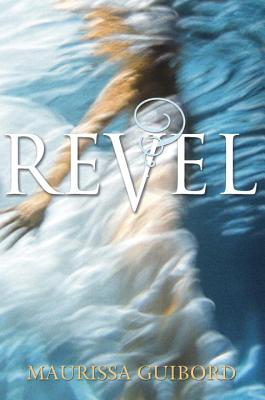
Interview with Maurissa Guibord, author of REVEL

Before becoming a writer, Maurissa Guibord’s work life consisted of slinging pizzas, alphabetizing things, and . . . oh, yeah, practicing medicine. Now she writes teen fantasy that’s mysterious and romantic with more than a touch of humor. (Even a sea god is human, after all.)

Maurissa’s first novel, WARPED (Delacorte, 2011) was a Rita Award finalist  for Best First Novel and Best Young Adult Romance. In a starred review, School Library Journal called it “imaginative, compelling,  and impossible to put down.”

With her second novel, REVEL, Maurissa moves from enchanted medieval tapestry to modern-day sea monsters—some of them the stuff that daydreams are made of. 

She lives on the coast of Maine with her husband and three kids. She’s a former Inkie, so we say: Welcome home, Maurissa!

Boy, Maurissa, you sure know how to show a girl a good time. In your first book, WARPED, you sent a modern young woman into a medieval tapestry to fight a dragon and an evil sorceress. And now, in REVEL, your heroine is trapped on a mysterious uncharted island complete with sea monsters. What propelled the leap from medieval England to a modern —but still harrowing—Maine island? What got you started on the road to REVEL?

So glad you had a good time, Ellen. I hope other readers will too! The idea for REVEL began with a visit to a real place here in Maine—Peaks Island. A ferry leaves from Portland several times a day to transport visitors and residents to this beautiful, rocky island. Each time I visit I’m impressed by the feeling of being very removed from everyday life on the mainland as well as a very distinct air of independence among the close knit people who live there year round.

Those features—the island being isolated from “real” life as well as the reserved nature of the inhabitants—just needed one more thing to get a story going in my head. Monsters!

I have to say, this book surprised me at every turn, and I NEVER would have predicted what happens to your heroine and her friends. Did you surprise yourself, or did you always know how things were going to turn out?

I had no idea what was going to happen or how things were going to be resolved. Even now I’m wondering what’s going on over there on Trespass…

Wednesday, January 9, 2013

Deadwood by Kell Andrews


CONGRATS TO TINA for winning a copy of DEADWOOD!
 
There’s something evil in Deadwood Park.

Martin Cruz hates his rotten new town. Then he gets a message from a tree telling him it’s cursed — and so is he. It’s not just any tree. It’s the Spirit Tree, the ancient beech the high school football team carves to commemorate the home opener. And every year they lose.

But the curse is no game, and it gets worse. Businesses fail. Trees topple like dominos. Sinkholes open up in the streets, swallowing cars and buildings. Even people begin to fade, drained of life.

Martin teams up with know-it-all soccer star Hannah Vaughan. Together they must heal the tree, or be stuck in Deadwood Park at the mercy of the psycho who cursed it.


cindy: It's my pleasure to have Kell Andrews join us at the Enchanted Inkpot today! Your middle grade debut DEADWOOD is unlike any other fantasy I've read before, and I enjoyed it very much. I liked the idea of old magic instilled in nature and the trees. What inspired the root of your novel? Was it based on any myth or folklore at all, or perhaps even a tree in real life? (I just noticed my "root" pun. Wasn't intended, ha!)

kell: People all over the world have believed that plants have spirits. I wondered why, and that's why I created a tree mythology from a science fiction perspective. My reference manual was the 1973 alternative science bestseller, The Secret Life of Plants by Peter Tompkins and Christopher Bird, which explores the idea of plant sentience. This was the book popularized the 1970s idea that you should talk to your plants to keep them healthy. Most of the evidence in the book is actually pseudoscience, but the David Attenborough 1995 BBC/Turner Broadcasting mini The Private Life of Plants is more scientifically rigorous and covers related territory about plant survival mechanisms. I drew on the companion book too. 

Then, from that starting point of plant ecology and botany, I tied in some of the culturally ubiquitous myths about tree beings of all kinds.

cindy: I remember Prince Charles saying he talked to his plants. And a television show that displayed plants growing toward a speaker that played classical music and away from one that played rock (or something noisy and "dissonant"). ha! A fascinating area of study, indeed. I really appreciated the relationships you created in your novel--from the sibling friendships between Hannah and her older brothers, to the uncertain and awkward bond between Hannah and Martin. Even that between Hannah and Martin and the Spirit Tree. Were these interplays something you consciously wanted to focus on (family and friendship) or did they arise on their own in your writing?

kell: It was important to me to put both Hannah and Martin in strong, loving families. When I first planned the novel, Hannah had five older brothers, but even I got confused, so I narrowed it down to two. And Martin might living with his cold, demanding aunt, but only because his mother has been deployed to Afghanistan. She still shows up as an influential character in the novel, even if just by Skype and instant message.

And of course the relationship between Hannah and Martin is central -- neither of them is the person the other expected, but each was the friend that the other needed at that time. It just takes them a while to figure it out -- there are so many social pressures at that age, and nobody is really sure of themselves, even when they look confident to others.

cindy: Whoa on the five older brothers! I think the two she had stood out well individually. And I loved your emphasis on family. That came across. I also noted and appreciated your inclusiveness of diverse characters in the novel--was this a conscious choice or something that came naturally?

kell: The town where DEADWOOD takes place is an important part of the story, and it's a diverse place, like communities I based it on and where I've always lived. Hannah is a white Anglo and Martin is Puerto Rican. I'm white, so I was nervous about doing Martin's character justice. I chickened out originally and made his mother and grandmother, who raised him together, white, while only his father was Puerto Rican. But although Martin's ethnic background isn't central to the progression of the plot, I realized it IS central to Martin himself. He asserted himself and his identity, so I changed his heritage to fit. I found that he held that cultural identity very close, reflective of his feelings for his mother and grandmother, and I hope it works.

cindy: I truly do believe in staying true to your characters and their stories. I'm glad Martin spoke up. =) Could you share with us a little about your process in writing DEADWOOD as well as your journey to publication?

kell: I wrote DEADWOOD while my former agent was subbing an earlier middle-grade novel. That one didn't sell, and I ended up on my own again. I queried agents with DEADWOOD, but it didn't work out. Still, I had faith in the story and it has some timely elements, so I didn't want to shelve it. I found Pugalicious Press, which has been a good fit. And now I have a new agent for my subsequent work.

cindy: It is a fabulous debut--well written, entertaining, thought-provoking and original! Congrats to you! And last but never least, what is your favorite pastry?

kell: Do maple walnut scones count? Because yum.

cindy: Oh scones count for sure!! Great choice! And thanks so much for stopping by the Enchanted Inkpot! To learn more about kell, visit her tumblr here!

Deadwood giveaway!

I will be giving away my copy of Deadwood to one lucky winner! Simply comment in this post to enter. +1 entry if you are a follower of our blog. +1 if you tweet or fb status, etc, with a link to this post and mention of Deadwood giveaway. I will pick a winner on Wednesday, 1/16 and post winner name at the top of this entry. Good luck! (Open to US mailing addresses.)

Cindy Pon is the author of Silver Phoenix (Greenwillow, 2009), which was named one of the Top Ten Fantasy and Science Fiction Books for Youth by the American Library Association’s Booklist, and one of 2009′s best Fantasy, Science Fiction and Horror by VOYA. The sequel to Silver Phoenix, titled Fury of the Phoenix, was released in April 2011. Her first published short story is featured in Diverse Energies, a multicultural YA dystopian anthology from Tu Books (October 2012). Cindy is also a Chinese brush painting student of over a decade. Visit her website at www.cindypon.com.

Wednesday, December 12, 2012

The Crimson Crown Interview


congrats, carl, on winning a copy of The Crimson Crown! thanks to all who participated! cheers, cindy
 
cindy: Cinda, it is an honor and pleasure to interview you for your final book in the Seven Realms Series: The Crimson Crown. I admit that I read this thick book in less than a day, incapable of savoring it slowly. I simply had to know what would happen to these favorite characters of mine NOW! You did not disappoint, and ended the series so fabulously. Many congratulations to you! 

We discussed your writing process when I interviewed you a year ago for The Gray Wolf Throne. I, myself, feel very bereft now that the series is done. How did you feel while writing this final book in the tetralogy? 

Cinda: This book was amazingly satisfying to write, since I'd been waiting so very long to write some of the scenes in it. I had a good head start on it when I finished The Gray Wolf Throne, since by the time I realized that I couldn't finish the story in three books, I already had a third of The Crimson Crown written (it was originally supposed to be a trilogy.) Although there were lots of editorial revisions along the way, I always had a clear vision of where I was going, though at times I wasn't sure how I was going to get there. Much like my characters, I suppose. After all I've put them through, I think they deserve a bit of a rest while I work on my Heir Chronicles spinoff. But I may yet return to the Seven Realms. 

cindy: It's always reassuring for me when I learn about the writing process of authors I admire. We all struggle through our processes! I read in a recent interview with you that you don't believe themes come first in novels, that they arise when you write the story. I do believe that often, what we find important personally can make its way onto the page. Looking back on the series, what do you think are some major themes in these books? And are you surprised by any? 

Cinda: All of my stories are about transformation--I find great comfort in the notion that we are constantly transforming ourselves. That it's never too late to go in a different direction, that we're never "finished" in terms of growth and change. When teens ask me what I would be if I were not a writer, I tell them that I've already been those things, and now is my time to be a writer. It's been such fun watching Han and Raisa transform over the course of the four books into the adults they're meant to be. And that's the job of adolescence. 

I'm intrigued by the notion of power and the effect it has on character. Many of the wizards in my stories are arrogant, ruthless people because they are powerful and they are used to having their own way. But there are always people who exceed our expectations. Who succeed against all odds. That's Han Alister. 

cindy: I think you tackled both themes of transformation and power fantastically. Han changed so much, but Raisa also grew. I realize after finishing this fantastic series that I don't know your journey to becoming an author. I know you have a background in nutrition. But how long have you been writing, and what prompted you to try and become published in the first place? (For me, it was a major change in my life--becoming a mother and staying at home full time. I needed to have something to call my own again, and it was writing!) 

Cinda: I was not a strong student in the early grades, but I wrote a poem in third grade, and my teacher praised it and hung it up at the science fair, and I thought, "Maybe I'm good at this." I've been writing, off and on, ever since. I wrote my first novels when I was in junior high, but got away from fiction when I was working my way through college. Too much nonfiction to write! 

Like you, I returned to writing when my children were small. It wasn't that I needed something else to do--I was working full time in nutrition--but I was experiencing so many new emotions as a parent that I felt the need to "get things down." I wrote personal essays and feature articles on health and parenting for the Cleveland newspapers. When my sons were thirteen and sixteen, I decided to return to fiction. I wanted to write something my sons would enjoy reading. I had an idea about a high school student in Ohio who learns he's among the last of a guild of magical warriors. That story became my first published novel, The Warrior Heir. 

cindy: Teachers are amazing, and it truly only takes a word of encouragement at the right time for a child I think, to change their life in a way. And I really loved The Warrior Heir--I didn't realize that was your debut! What will you miss the most about writing this series, Cinda? 

Cinda: Writing is like any other job--it's the people you miss the most when you move on.So I'll miss spending every day with those characters. The good news is that I'll be revisiting some old friends with a return to the Heir Chronicles. Also, it's always difficult to go from a polished, pretty final draft to an ugly first draft. Or, even worse, work on both at the same time, which is what you have to do when you write a book a year. 

cindy: Rough drafts are so painful for me, too! Could you tell us what other fantastic reads we have to look forward to from you in the near future? 

Cinda: Right now I'm working on two new books in the Heir Chronicles, a spinoff that involves new characters as well as old. The first will likely be called The Enchanter Heir, and is scheduled for a fall, 2013 release. 

cindy: Sounds fantastic! And since I already asked the pastry question, what is a favorite snack or indulgence of yours while you are writing? 

Cinda: Once I've satisfied my morning coffee addiction, I drink Market Spice tea from the Pike Place market--I drink it iced, all day long. As far as snacks go, I love love love popcorn, but don't usually eat it while writing (I don't want to get butter all over the keyboard.) 

cindy: I'm intrigued by the iced spice tea! I love iced teas myself. Thank you so much for stopping by as interviewee in your busy schedule, Cinda! 

Learn more about Cinda at her official website!

Cinda's publisher has been kind enough to donate a copy of The Crimson Crown for a giveaway!! 

1. Simply comment to enter for one point (include EMAIL). 
2. Tweet, facebook status, or blog about this interview and contest with a link to this post for +1 point. 
3. Become a follower to Enchanted Inkpot for another +1. 

Three points total! Ships to US addresses only. 

I will choose a random winner on Wednesday, 1/2/2013 and post name at top of this entry that day. Good luck!! 

Cindy Pon is the author of Silver Phoenix (Greenwillow, 2009), which was named one of the Top Ten Fantasy and Science Fiction Books for Youth by the American Library Association’s Booklist, and one of 2009′s best Fantasy, Science Fiction and Horror by VOYA. The sequel to Silver Phoenix, titled Fury of the Phoenix, was released in April 2011. Her first published short story is featured in Diverse Energies, a multicultural YA dystopian anthology from Tu Books (October 2012). Cindy is also a Chinese brush painting student of over a decade. Visit her website at www.cindypon.com.

Wednesday, August 22, 2012

Featuring NIKKI LOFTIN and THE SINISTER SWEETNESS OF SPLENDID ACADEMY!

I am so thrilled today to feature not only a fellow Austin (very talented) writer but also one of my friends!

NIKKI LOFTIN!


Nikki's debut novel has just been released this week! Woo hoo!

THE SINISTER SWEETNESS OF SPLENDID ACADEMY by Nikki Loftin (Razorbill , August 21, 2012)


Five quick things about THE SINISTER SWEETNESS OF SPLENDID ACADEMY:

1) It's middle grade.
2) It's a Hansel & Gretel retelling.
3) It's creepy and cool and clever and unique.
4) Don't let the title scare you.
5) It's amazing! A fun read that will keep you turning pages until the very last minute!

And now, Nikki has agreed to join us here at The Enchanted Inkpot to answer a few questions!

*****


Hi, Nikki! Thanks for being here!


PJH: You’ve just run into an old classmate from high school and you tell them your latest book just came out. They ask what it’s about. What do you say?

NL: Cannibalistic teachers! And then I would stop and let them talk about their kids and jobs. (I’m learning that not everyone wants to hear all the details of my precious book. What a strange thought!) But if they still seem interested, I would tell them it’s a modern re-imagining of Hansel and Gretel, set in a charter school that has everything a kid could want... plus some very hungry-looking teachers. And then we would totally dish about WHICH teachers from our past I drew inspiration from.


PJH: I love hearing happy publication stories. Can you tell us the path to publication for THE SINISTER SWEETNESS OF SPLENDID ACADEMY?

NL: For one thing, although this is my debut novel, it is by no means my first completed manuscript! I signed with my agent, Suzie Townsend, on a funny “boy book,” and wrote Sinister Sweetness while that was on submission. By the time we realized the first book wasn’t going to sell (not that year, at least – maybe someday. Hope springs eternal!), I was about finished with this one. (Um, I’m glossing over the two other manuscripts I drafted in this same year. I write pretty fast.) My agent and I agreed Sinister Sweetness (called Gingerbread at the time) would be the best next manuscript to sub. My editor, Laura Arnold, had just signed on at Razorbill, and Suzie sent her the manuscript right off the bat. Laura says it was the first manuscript to cross her desk in the new office – and the first one she bought for Razorbill! There is something to be said for timing, I think.


PJH: So obviously you love fairy tales. Me, too! What is the most interesting thing you’ve learned or the thing that surprised you the most in researching fairy tales for the book?

NL: Well, I’ve been obsessed with fairy tales my whole life, so I didn’t expect to discover much new information. But I did, of course. Did you know that Hansel and Gretel is one of the fairy tales that exists in some form in almost every culture in the world? Most people know the Grimm Brothers’ version from Germany, but the story existed prior to that in similar forms in France, Eastern Europe, and Russia (Baba Yaga). I even read some strikingly similar Native American myths during my procrastinati- I mean, research.


PJH: When it comes to marketing, what do you think makes the biggest difference in whether a book is successful?

NL: Oh, I wish I knew this! I would sell the answer for a million dollars.

I think the most important thing is to write a great book. Then be willing to tell people about it, over and over, with a smile on your face and happy little fingers on the keyboard, for a few years.

I have a sneaking feeling that the real secret for a book like mine is getting it into the hands of the target readers – 8 to 12 year-olds -- and letting them do the work by telling their friends and teachers and parents about it. If they love it, they’ll spread the word with no extra urging, right? That’s why I’m planning to do some big book giveaways later in the fall to teachers, librarians, and book clubs. Let’s hope it works. I’m also working on a website for Splendid Academy (www.SplendidAcademy.com) that will feature extras: teacher bios, menus for the school cafeteria, and ominous lesson plans. I think adding something online for kids, so they can continue their adventures at Splendid Academy, will be fun for my readers!


PJH: What is next? WIPs? Future publications? Please tell all!

NL: Oh, my. There are quite a few things! First, I’m in an anthology coming out this November from Zest Books, called Dear Teen Me: Authors Write Letters to Their Teen Selves. I wrote a very revealing essay about the most hideous kiss I’ve ever experienced (it was more like having my face stuck in car wash), and my general attitude as a teen. Which was totally awesome, by the way. (No matter what my mom says.)

Then, my second book will be coming out from Razorbill in early 2014. This one is a book I’ve been working on in some form for about five years. (For the writers out there, this one is the “book of my heart.” I cried when my editor told me that was the manuscript she’d chosen to go out with next. I am so, so grateful.)

I thought it would never be finished. I couldn’t find the right form! First, I wrote it as a picture book. And re-wrote it, ad infinitum. Over the years I attempted to re-frame it as a novel again and again, and finally hit on the right POV character last fall. It’s called Nightingale’s Nest, and it’s a modern-day re-imagining of the Hans Christian Anderson fairy tale “The Nightingale.” This book is more magical realism than straight-up fantasy, and it deals with some disturbing themes, but will be middle grade as well.

I also have secret news regarding future books… but I can’t spill just yet.


Just for fun:

PJH: There are tons of books out there. Tons! What are five awesome reasons why your book has to be the one for them to read?

NL:
1. Cannibalistic teachers, people. I mean, who HASN’T had at least one teacher that you swore was trying to kill you? This book goes there, and does it in a creepy, sometimes funny, way.
2. It’s a story about enchanted food. Page after page of the best things to eat I could think up. I gained a LOT of weight doing the research for this book. Enjoy the deliciousness right along with the unsuspecting characters.
3. The playground at Splendid Academy is the best one in the entire universe. All the regular stuff, plus rock walls for climbing, tree houses, a “life-size” chess set, seesaws and merry-go-rounds, ziplines, soccer and football fields, a mini-skate park… It’s irresistible to kids. Just like a certain gingerbread house…
4. Lorelei is a strong, brave girl – but she’s a regular kid. She doesn’t have super powers or super intelligence. In fact, she has a learning disability! And her friend, Andrew, has a serious problem with weight that he’s learning to overcome. These characters inspired me – I think they might inspire young readers, too.
5. As a fledgling author, I didn’t realize MG stood for Middle Grade. I was sure it stood for… Murdery Goodness. (Insert evil laughter here.) So there are a lot of scary, gruesome bits for those of you who like that sort of thing. (Or is that just me?)


PJH: If the apocalypse came, would you still find a way to write? If yes, then how and why?

NL: I live way out in the country, and I know how to shoot a rifle. Of course, I would need to buy one first… but I could set my two kids on lookout, and when they saw the zombies, shout out so Mommy could hit save on the novel, come out, and shoot the zombies’ heads clean off. Wait, this was a zombie apocalypse, right? Because that is definitely the coolest kind.


PJH: Finish this sentence, and tell us why.

Writing is a lot like….

NL: ...telling outrageous lies while eating as much chocolate as you can without dropping too much in between the keys on the keyboard, because that gets expensive, and trust me, I KNOW. Oh, wait. I mean, writing is a lot like a sunset. Or a symphony. Or something inspirational like that. Let’s forget about the chocolate-covered keyboard. Oh, I’m no good at this.


PJH: Mummy vs. Bigfoot... Who would win and why?

NL: Bigfoot because mummies aren’t REAL. Duh.


PJH: Please share your favorite inspirational thought with our readers!

NL: My favorite one? I sort of collect them; it helps when dealing with rejection. Here’s the one closest to my keyboard, by Ralph Waldo Emerson: “We are very near greatness; one step and we are safe; can we not take the leap?”


Thanks!

PJH: Thank you, Nikki! And good luck with everything!

***

P. J. Hoover is the author of the upcoming dystopia/mythology YA book, SOLSTICE (Tor Teen, June 2013), the upcoming Egyptian mythology MG book, TUT (Tor Children's, Winter 2014), and the middle-grade SFF series, THE FORGOTTEN WORLDS BOOKS (CBAY, 2008-2010). You can read more about her and her books on P. J.'s website or blog.


Wednesday, May 30, 2012

Interview with Leigh Bardugo, author of SHADOW AND BONE


It's my honor to introduce to the Inkpot debut fantasy author Leigh Bardugo, author of SHADOW AND BONE, book 1 of the Grisha Trilogy, a high fantasy series set in a Russian-themed fantasy world. Scheduled for release June 5, 2012,  SHADOW AND BONE is already garnering lots of positive attention, including being named as an Indie Next Selection and as one of ABA's Best New Voices.

CC: When did you know that you wanted to be a writer? Can you tell us about your personal journey from concept to publication?
When I was a kid, I made up stories to keep myself entertained. (Most of them involved having a lot of siblings, sleeping in a hayloft, solving crimes, and/or running a hotel.) Sometimes I wrote them down or illustrated them, but most of the time I just walked around muttering to myself. (Still do. I think it's an only child thing.) When I got older, writing became a survival mechanism. It got me through everything from boring classes to the day to day barbarism of junior high school. From then on, I knew I wanted to be a writer, but I flailed around for a good long while. I changed my major about twenty times. I worked as a journalist and a copywriter. It took time for me to find the story I wanted to tell and the discipline to tell it.
From concept to query, writing SHADOW AND BONE took me about a year. I sort of tricked myself into finishing it. I told myself that, once it was done, I would shove it in a drawer or toss it on a bonfire. No one would ever see it. It helped shut down a lot of those negative, critical voices in my head. So I was that much more terrified when I finally did turn it over to my beta readers. I gave them all kinds of caveats-- it isn't very good, it's my first book, all that mumble and fuss. (For the record, I don't recommend doing this. Just let your readers read.)
After I started querying, things moved quickly. Jo offered me representation, we went on submission just a week after I'd signed, and a few weeks later we were at auction. It was thrilling, but I want to stress the fact that I got very, very lucky. It's not that I don't believe in my book, but the timing also happened to be right for me. If people are out there querying or if they're on submission and the wheels are turning a bit more slowly, I don't want them to get discouraged.
CC: How did you come to write fantasy fiction? Have you always been a fan of that genre? Are there particular authors or works that have been an inspiration or influence on you?
When I look back on the books that I really adored growing up, that I read and reread, so many are fantasy, science fiction, and horror. It's what I love and it's the way that I prefer to look at the world. As far as specific influences and inspiration, A SWIFTLY TILTING PLANET and DUNE were pivot books-- books that actually shifted the way I viewed the world. I read tons of Stephen King; IT and EYES OF THE DRAGON were favorites, though the quote that always stayed with me was from THE GUNSLINGER: "There are other worlds than these." It was almost like a mantra for me. More recently, George R. R. Martin's A SONG OF ICE AND FIRE series completely wrecked me. Or, I guess, since the series isn't finished, it's in the process of wrecking me.
CC: What made you decide to write books for teens?
I'm not sure I can call it a decision. I set out to write a story about characters who were at a particular place in their lives. It was only later that I realized I was writing YA.
CC: As someone who knows how exhausting it can be to build a society from scratch, I loved the world-building resources on your website, including the historical images that served as inspiration for your Russian-themed fantasy world.  How did you come to choose Russia as a template for Ravka? Do you have a personal or family connection to Russia?
(I just need to take a second to fangirl out a little and tell you how much I love your world building, particularly the elegant way magic is ordered in the Heir series. </end squee>)
Somewhere way back, my family has a connection to Russia, but I don't think that's why I chose it as the cultural touchstone for my world. I think many outsiders already view Russia as a kind of fantasyland. When you ask someone unfamiliar with the culture to describe it, they'll come back with these incredibly disparate sets of images. One set is lush, beautiful, decadent-- the Winter Palace, jeweled eggs, ballet, St. Basil's. The other is extraordinarily brutal-- the gulag, breadlines, mass graves, the murder of the Tsar's family. Neither of these extremes is the real Russia. They're fantasies; they romanticize both the best and the worst of Russian history and culture. I don't know if I succeeded, but I wanted to tap into that and then go further.
CC: Some readers assume that we fantasists write fantasy so we don’t have to do any research. What kind of research did you do to lay the foundation for your world?
Do they really? How quaint. I honestly enjoy research. You make all kinds of surprising discoveries and you can never tell where a good idea may come from. I focused most heavily on history, culture, and folklore, but I went through cookbooks, old atlases, collections of fairytales, and one of the filthiest books of slang I've ever set eyes on. I built up a library of images (textiles, landscapes, city plans) and kept long lists of names, notecards describing how peasants ate and how nobles ate, songs, superstitions, illustrations. Erdene Ukhaasai was kind enough to help me untangle some choices in Russian and Mongolian when it came to building the Ravkan language. (As a little thank you, I named the Grisha combat instructor, Botkin Yul-Erdene after her. She probably would have preferred a gift card.)  
CC: Are you a plotter or a plunger? Why does your method work for you? Do you have the entire Grisha trilogy planned out?
Can we please write a dystopian where the world has broken down into warring tribes of Plotters, Pantsers, and Plungers? I always feel like a bit of a fraud talking about my methods because I'm still so new to this. Disclaimer aside, I am most definitely a plotter. I outline everything and I've always known how the trilogy will end. Still, things change in the writing. I kept alive a character I had every intention of killing in Book 2, so the structure of Book 3 will change because of that. Also, it's not like the outline is some tidy, ordered thing. It's basically a rambling mess of a draft. It's full of questions and comments like "Why does X need the Y thingie" and "Make this make sense." But once I have the beginning, middle, and end down on paper, it makes returning to the story so much less daunting.
CC: In your other life, you’re a makeup artist—and you create illusions for television and movie productions. What are the commonalities and differences between creating fantasy on the page and on the skin? How does one form of art fuel or complement the other? Is it energizing to shift media in that way?
Wow. Interesting questions. Makeup is temporal in a way that writing is not. There's something satisfying about setting out to craft something and being able to see the finished product so quickly. But in both makeup and writing, it's about creating illusion. Whether I'm using words or prosthetics, if I get it right, you won't see the seams or cracks. You won't be aware of the process; you'll just experience the result. I do think that working visually sometimes helps free up ideas and words. I always find it useful to step away from the page, to do something else, something active that engages the mind in a different way. Otherwise, you're just overworking the same muscle.
CC:  I am a great fan of complex, layered, antagonists. You've done a great job with that in SHADOW AND BONE. Do you have a method for creating three-dimensional characters of all kinds? 
I don't know that I have a method, but I think there's a fine line between hero and villain. Very few people set out to do evil. They don't go to bed at night rubbing their hands together and cackling malevolently about all the bad, bad things they're planning. Most of them do damage in a misguided attempt to do good.  And in the end, it depends who tells the tale, doesn't it? I think it would be easy to look at some of the   choices that heroes and heroines make and see them as selfish, indulgent, and short-sighted. This is one of the reasons I love books like WICKED and WIDE SARGASSO SEA.
CC:  Can you give us any hints about the next book in the series? Dish, please!
I want to blab everything, but I can't! I can tell you that readers will get to travel beyond Ravka's borders, and I'll be introducing a few new characters, including one that is probably my favorite of the whole series. He's a privateer and he's so much fun to write. Just about everyone from Book 1 will be back, though I can't promise you that they're all going to make it through unscathed. *Rubs hands together, cackles with glee* Hmm, maybe I was wrong about villains.
Before I go, I just want to say what an honor it was to be interviewed by you. I'm such a fan and this still doesn't quite seem real. Also, big thanks to everyone at the Enchanted Inkpot! 

SHADOW AND BONE is set for release June 5, 2012. Visit Leigh here for more information on the world of the Grisha.  

Cinda Williams Chima is the author of the Heir Chronicles and Seven Realms novels. Her upcoming novel, The Crimson Crown, releases October 23, 2012. Find her on the web here.