Showing posts with label Hobbit. Show all posts

Wednesday, December 11, 2013

You like THE HOBBIT? My book is exactly like that!

There's this fun game we play at Comic Con when pitching our books to potential readers. Find out what they like, and explain how our book is exactly like their favorite book. And what better book to compare against than THE HOBBIT?


So below I give you a holiday shopping guide from the Inkies. For all those fans of THE HOBBIT who can't wait for the movie to come out, here are the many ways our books are exactly like this classic.

****


P. J. Hoover
How is SOLSTICE like THE HOBBIT? Let's see...the weather gets bad in THE HOBBIT and the weather gets really bad in SOLSTICE.


Erin Cashman
THE EXCEPTIONALS is like THE HOBBIT because Claire Walker finds herself trapped in a cavern deep beneath a mountain, like Bilbo Baggins, and like Bilbo she has to use her wits to escape.

Mike Jung
GEEKS, GIRLS, AND SECRET IDENTITIES is like THE HOBBIT because there's a scene where a couple of characters travel underwater inside a giant robot head, which isn't exactly like traveling down a river inside a barrel but I got nothing else and I like the Hobbit game, I WANNA PLAY THE HOBBIT GAME...

Lisa Green
THE BINDING STONE is like THE HOBBIT because Jered finds a magic ring that causes all sorts of problems.

Hilari Bell
THE KNIGHT & ROGUE books are like THE HOBBIT, because this is what Fisk thinks when Michael proposes that they go on an adventure:  A glorious adventure.  In other words, a disaster in the making. 

Lena Coakley
WITCHLANDERS is like THE HOBBIT because Ryder must go under a mountain to find the dark secrets hidden there.

Anne Nesbet
A BOX OF GARGOYLES is like THE HOBBIT (and, for that matter, a little like certain episodes of DR. WHO) because it contains scary stone statues that look like they might recently have been doing some moving around....

Ellen Booraem
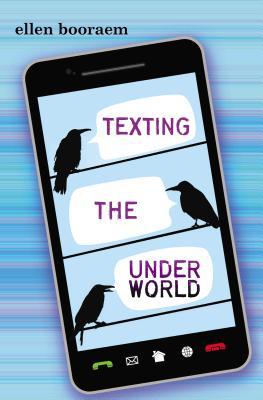
TEXTING THE UNDERWORLD is like THE HOBBIT because the main character is a fearful homebody who ends up traveling way, way out of his comfort zone. And he finds his courage there!

Dawn Metcalf
INVISIBLE is like THE HOBBIT because Joy, like Bilbo, must face down a seemingly unstoppable foe in order to get back to a peaceful life.

William Alexander
My book GOBLIN SECRETS is like THE HOBBIT because goblins.

Miriam Forster
CITY OF A THOUSAND DOLLS is like THE HOBBIT because it has talking animals. :)

Katie Carroll
ELIXIR BOUND is like THE HOBBIT because it is a there and back again tale of Katora and her companions going into a dangerous forest on a mission and having to find their way back home.

Keely Parrack
SNOWPOCALYPSE is like THE HOBBIT because a small ragtag group has to face harsh weather and multiple foes as they battle their way through the mountains.


So there you go! All the many ways our books are exactly like THE HOBBIT! Enjoy reading and enjoy the movie!


*****


P. J. Hoover is the author of the dystopia/mythology YA book, SOLSTICE (Tor Teen, June 2013), the upcoming Egyptian mythology MG book, TUT (Tor Children's, Winter 2014), and the middle-grade SFF series, THE FORGOTTEN WORLDS BOOKS (CBAY, 2008-2010). You can read more about her and her books on P. J.'s website or blog.


Monday, December 9, 2013

THE HOBBIT QUIZ AND GIVEAWAY


In celebration of the release of THE HOBBIT: THE DESOLATION OF SMAUG on December 13th, we here at the Inkpot (HOBBIT loving fans ourselves!) have a quiz to test your knowledge of the book, and refresh your memory before the big release! 

We will choose 5 winners and each winner will receive a signed copy of a book from an Enchanted Inkpot Author! And come back tomorrow, as we discuss how our books are like THE HOBBIT in a very fun post!
And here are thirteen Questions, one for each Dwarf, and because the movie comes out on December 13th:


1. What is Bilbo’s mother’s name?  
2. What was the rumor about the Tooks? 
3. How many are in the company, and of what races?   
4. What does Bilbo decide to call 
his sword?
5. What is the color of Bilbo’s Sword when enemies are close?
6. Where does the company first encounter the Elves?
7. What is the riddle that Bilbo stumps Gollum with? 
8. What mountain are the Dwarves trying to reclaim? 
9. Who discovers the Arkenstone? 
10. What special item does Thorin give to Bilbo from the treasure, that is featured again in LOTR? 
11. Who kills Smaug? 
12. After Smaug is defeated, what two races might go to war with the Dwarves over the treasure?
13. Who takes the Arkenstone from Thorin?

The first five people to get all questions right win! (Hint - if you're stumped, the answer to some of the questions may be found in our Hobbit read along posts of last year) You will be asked to pick your first, second and third choice from one of the following books (in alphabetical order by author) donated by Inkpot members. The book will be signed by the author and mailed to you. Good Luck - and remember to come back tomorrow!

THE LAST KNIGHT, by Hilari Bell 
Need a Hero? You've got one in Sir Michael Sevenson. Although there hasn't been a knight errant in over two hundred years, this young noble has decided to revive the trade. He's found himself a reluctant partner in Fisk, a clever rogue who has been given the choice of serving as Michael's squire or going to jail for a very long time. Now Michael and Fisk are on a quest to right wrongs, protect the innocent, and make the world a happier place. It's not going to be easy. On their first attempt at rescuing a damsel in distress, they break a lady out of a tower, only to discover she was there for good reason: awaiting trial for poisoning her husband. Now the would-be heroes must find Lady Ceciel and return her to justice or be condemned themselves

TEXTING THE UNDERWORLD, by Ellen Booraem: 
A Kirkus Starred Review
.
Conor O’Neill always thought spiders—and his little sister, Glennie—were the worst kind of monsters life had in store. That was before an inexperienced young banshee named Ashling showed up in his bedroom. The arrival of a banshee, as Conor soon learns, means only one thing: Someone in his family is going to die. Not only will Ashling not tell him who it is, it turns out that she’s so fascinated by the world above that she insists on going to middle school with him. The more Ashling gets involved in his life, the harder it becomes to keep her identity a secret from his friends and teachers—and the more Conor worries about his family. If he wants to keep them safe, he’s going to have to do the scariest thing he’s ever done:  Pay a visit to the underworld. If only there were an app for that.

THE EXCEPTIONALS, by Erin Cashman 
A Bank Street College of Education Best Book of The Year, 2013
In a famous family of exceptionally talented people, fifteen-year-old Claire Walker is ordinary . . . or so she leads everyone to believe. Yet the minute she steps out of line, her parents transfer her to Cambial Academy: the prestigious boarding school that her great-grandfather founded for students with supernatural abilities, or “specials”. Although Claire can’t see ghosts or move objects with her mind like the other students, she does have a special she considers too lame to admit: she can hear the thoughts of animals. Just as she is settling in, one by one the most talented students – the Exceptionals – go missing. After years of ignoring her special gift, Claire decides the time has come to embrace her ability . . . before it’s too late.


WITCHLANDERS, by Lena Coakley 
A high fantasy full of swords, snow monsters, and singing magic. Kirkus, School Library Journal, and Publisher's Weekly Starred Reviews. High in their mountain covens, red witches pray to the Goddess, protecting the Witchlands by throwing the bones and foretelling the future. It’s all a fake. At least, that’s what Ryder thinks. He doubts the witches really deserve their tithes—one quarter of all the crops his village can produce. And even if they can predict the future, what danger is there to foretell, now that his people’s old enemy, the Baen, has been defeated? But when a terrifying new magic threatens both his village and the coven, Ryder must confront the beautiful and silent witch who holds all the secrets. Everything he’s ever believed about witches, the Baen, magic and about himself will change, when he discovers that the prophecies he’s always scorned— Are about him.

CITY OF A THOUSAND DOLLS, by Miriam Foster
Nisha was abandoned at the gates of the City of a Thousand Dolls when she was just a child. Now sixteen, she lives on the grounds of the isolated estate, where orphan girls apprentice as musicians, healers, courtesans, and, if the rumors are true, assassins. Nisha makes her way as Matron’s assistant, her closest companions the mysterious cats that trail her shadow. Only when she begins a forbidden flirtation with the city’s handsome young courier does she let herself imagine a life outside the walls. Until one by one, girls around her start to die. Before she becomes the next victim, Nisha decides to uncover the secrets that surround the girls’ deaths. But by getting involved, Nisha jeopardizes not only her own future in the City of a Thousand Dolls—but her own life. 

 THE BINDING STONE, by Lisa Gail Green 
Tricked into slavery by the man she loved, the Djinni Leela has an eternity to regret her choices.

Awakened in the prison of her adolescent body, she finds a new master in possession of the opal that binds her. But seventeen-year-old Jered is unlike any she's seen. His kindness makes Leela yearn to trust again, to allow herself a glimmer of hope. 
Could Jered be strong enough to free her from the curse of the Binding Stone?


THE EMERALD TABLET, by PJ Hoover
Benjamin is different from other kids—he can read minds and use telekinesis. But it isn’t until he’s sent to summer school on a hidden, underwater continent that he learns the truth. 

It turns out, Benjamin isn’t really human at all—and the powers he thought made him special, just make him normal. But then the mysterious Emerald Tablet chooses him as its champion and he’s thrust into a mission to save the world.


Thanks for entering and see you tomorrow!

Thursday, November 15, 2012

The Hobbit Read-Along, Day 4: Chapters 13-16!

All week we are reading J. R. R. Tolkien's The Hobbit together here at the Inkpot.  Be sure to come back tomorrow for the exciting conclusion!

To the casual reader, chapters 13-16 could seem to be when none of the action happens. There are no goblins or trolls. No riddles in the dark. No bears and eagles and wolves. But for the reader who wants to take a step just a bit farther from the hobbit hole, chapters 13-16 are the heart of the novel.

As I take a deeper look at Chapters 13-16, it's where we truly see that this is more than a simple adventure. It's more than a tale told about a hobbit. It's the story of a dwarf who should be king. And of a man who carries noble blood and is descended from the Lord of the Dale. Thorin and Bard rule these chapters, and Bilbo is only transcribing.


Chapter 13: NOT AT HOME
(This chapter brought to you by Thorin)
We start in chapter 13 with the dwarves stuck in the side door entrance of the Lonely Mountain. They are afraid to venture down the tunnel and into the lair of the dragon. And they can't get out the way they came since the door has collapsed. But time goes by and hunger and desire for riches take over and down to the treasure trove they go.
After the fear wears off, the dwarves go kinda nuts and start stuffing their pockets. And...
...Bilbo find the Arkenstone and proves that he truly is a burglar!
(and on a side note, Thorin also gives Bilbo the mithral coat of mail which I adore since it is then passed on to Frodo in LOTR.)
The dwarves get a little nervous and leave, heading for a nearby guard post.
And though Thorin is now technically King Under the Mountain, this realization has not quite hit him. He needs a moment (or two or three) for this to really sink in. We start to see it as he proclaims the glory to which the Lonely Mountain will be restored, but he still doesn't quite believe it's finally happened.


Chapter 14: FIRE AND WATER
(This chapter brought to you by Bard)
In chapter 14, Smaug comes to Esgaroth. This is a horrible battle, and many lives are lost. Like dead. And though it is quickly glanced over, that doesn't change the fact that it still happens. The dragon is angry and fierce, and he is taking out his wrath on the men. All seems lost. And then...
The thrush tells Bard where to aim. And...
Bard kills Smaug!
The town people try to name Bard king, but he is humble and does not accept this. And though he bows to the master of the town, he is truly the man in control. his dignity shines through, and he is the hero in every way.
And because elves are fun and we must get set up for the big battle, the wood elves come to join the men.
Everyone remembers the treasure. Everyone wants the treasure. The treasure is shiny.


Chapter 15: THE GATHERING OF THE CLOUDS
(This chapter brought to you by Thorin)
In chapter 15, we return to the dwarves. The raven tells of the men and elves gathering.
War between the dwarves and the men and elves is on the horizon.
So Thorin feels threatened by the men and elves and thus will not bargain, and the men and elves feel threatened by Thorin because he will not bargain. 
Thorin calls for reinforcements.
We now have three armies gathering. Men. Elves. Dwarves.
This part kind of reminds me of when a relative dies and there is some inheritance and everyone who feels they deserve a part starts to descend. Everyone has a valid claim. Everyone's claim in better than the next. And nobody will listen to anybody else. 
Again, this is a chapter about Thorin. He now has accepted that he is King under the Mountain! But he does not quite know how to handle this. Learn much, you will, Thorin.


Chapter 16: A THIEF IN THE NIGHT
(This chapter brought to you by Bilbo)
Go, Bilbo!
In chapter 16, Bilbo can't stand to see how the dwarves are acting. They won't listen to reason. Thorin is obsessed with the Arkenstone and does not want to give up any of his fortunes. War is imminent. The future is not so bright at all.
So Bilbo sneaks off in the night and visits the men and elves and delivers to them...The Arkenstone! He hopes they will use it as a bargaining tool. And though he knows he is going to get in huge trouble when he gets back, he returns because he does not want to abandon his friends.
Here we have our brief appearance by Gandalf as the mentor who congratulates his student for doing well. Gandalf is proud of Bilbo.
We are all proud of Bilbo.


It's easy to think of THE HOBBIT as a bit of a light-hearted adventure, but with these chapters, we are seeing war approach. We are seeing part of the population die from the destruction of the horrible dragon who has been tormenting the city of men for so long. We are seeing a fallen kingdom restored to the dwarves it was taken from. Even with the death of the dragon, it's the edge of a dark time for Middle Earth.


The Visuals
Before we end, let's take a step back to think about the visuals of these chapters. We're all excited about the movie, and I believe much of what I'm excited about the most is seeing
(1) the inside of the dragon's lair (because of what I am guessing will be its similarities to the magnificent Moria), and
(2) the abandoned city under the mountain (which I am wondering how much will remind me of Osgiliath).


Discussion Questions:
Who do you feel has a right to the treasure? How would you divide it at this point?

How do you think the tone and pacing of these chapters compare with the previous 12 chapters?

What should Bilbo's punishment be for giving the Arkenstone to the men? How would you react if you were in Thorin's place?

If you were one of the other dwarves who did not quite support Thorin's view, would you speak up and try to reason with him or keep quiet since he was now your king?

What parts, visually, are you most excited to see in the movie?

*****


P. J. Hoover is the author of the upcoming dystopia/mythology YA book, SOLSTICE (Tor Teen, June 2013), the upcoming Egyptian mythology MG book, TUT (Tor Children's, Winter 2014), and the middle-grade SFF series, THE FORGOTTEN WORLDS BOOKS (CBAY, 2008-2010). You can read more about her and her books on P. J.'s website or blog.


Wednesday, November 14, 2012

The Hobbit Read-Along, Day 3: Chapters 9-12!


The Wood-elves take the dwarves prisoner at the beginning of Chapter 9 ("Barrels out of Bond"), though all concerned are so hungry and miserable that "they were actually glad to be captured."  Luckily for the dwarves, Bilbo has the magic ring, so the elves don't know he has snuck into their underground realm, where he uses his growing talents as a burglar to find his way around, pilfer food, and discover the deep cell in which the elves are holding Thorin.  (THE HOBBIT is a book very rich in caves, by the way!)  Bilbo's task is to get all those dwarves safely out of prison.  He does this using, as the chapter title suggests, barrels, into which he packs the dwarves in order to float them down the river to the Long Lake.

Bruised and waterlogged, the poor dwarves finally get to crawl out of their barrels, and the Master of the town greets them with some suspicion.  His hand is forced by the townspeople's enthusiasm, however; the people of Lake-town promptly dig up all the old songs about the "return of the King under the Mountain" and sing them with gusto.  That's why Chapter 10 is called "A Warm Welcome"!  Fortunately for the Master of Lake-town, the dwarves are eager to set off in the direction of the Lonely Mountain, and they don't end up lingering too long.

Chapter 11, "On the Doorstep," takes us right to the "skirts of the Mountain," and even farther than that, up to the back door, but unfortunately for them, that door is closed, and nothing they do makes it budge.  It's up to Bilbo to save the day again by figuring out the secret message represented by an enormous thrush busily dining on snails near the hidden door.  Aha!  Just as the moon-letters on the map had told Elrond long before:  "Stand by the grey stone when the thrush knocks, and the setting sun with the last light of Durin's Day will shine upon the key-hole."  (I am impressed by a map thorough enough to mention local birds!)  Sure enough, the sun sets, the key is brought forth, and the stubborn door into the mountain finally opens. 

Does Thorin say, "Why, thank you, Mr. Baggins, for your sharp eye and useful bird-watching habits!  Why don't you take a nice rest now?"?  Why, no, he does not say that.  He says instead, "Now is the time for our esteemed Mr. Baggins . . . to perform the service for which he was included in our company; now is the time for him to earn his Reward."  The narrator, by the way, is much more mocking of a hero like Thorin than the LotR narrator will later be:  "You are familiar with Thorin's style on important occasions, so I will not give you any more of it, though he went on a good deal longer than this."  Poor Bilbo!  He will spend Chapter 12 ("Inside Information")  chatting with dragons.  A particular dragon, that is:  the dragon named Smaug. 

Dragons are tricky conversationalists.  Before Bilbo really understands what Smaug is up to, he spills a little too much information about, for instance, places the company has recently been.  The dragon flies off, intent on showing these bipeds who's in control around here.  Not a good time to be living in Lake-town!

Questions:  More echoes here of Lord of the Rings, did you notice?  A door into a cavern that will only open under very particular circumstances!  Another question:  would you rather ride a river INSIDE or ON TOP OF a barrel?  What does THE HOBBIT teach us about how to converse with ancient and dangerous creatures like dragons?  In his adventures thus far, has Bilbo done something you would find especially hard, if not impossible?  I, for instance, would have quailed in the face of Chapter 8's spiders.  And how how how did the map's rune-writer know that thrush would be there at the appointed hour?

***
Anne Nesbet is the author of THE CABINET OF EARTHS, which came out earlier this year from HarperCollins, and A BOX OF GARGOYLES (appearing in May 2013).  She lives in California (but not the warm part of California) with her dear family and an only moderately well-behaved Border Collie.  More info about Anne and her books at www.annenesbet.com

Tuesday, November 13, 2012

The Hobbit Read-Along: Chapters 5-8!

Today, we continue our group read of The Hobbit by J.R.R. Tolkien, preparing ourselves for the movie coming out next month. Return tomorrow for chapters 9-12!


 “…till suddenly his hand met what felt like a tiny ring of cold metal lying on the floor of the tunnel.”

Did JRR Tolkien have any idea what he was getting us into when he wrote those words? Eighty years later, when someone says “the Ring” they’re probably not talking Wagner.

The chapters we’re discussing today are Riddles in the Dark, Out of the Frying Pan into the Fire, Queer Lodgings, and Flies and Spiders. In addition to introducing us to the One Ring and Gollum, these are the chapters in which Bilbo (and hobbits) come into their own in the wide world.

The summary: Bilbo awakes alone in the dark, having been knocked out and left behind while he, Gandalf, and the dwarves fled the goblins. Groping around in the dark, he finds the ring and sticks it in his pocket, thinking nothing of it. He stumbles upon the underground lake that is home to Gollum, whom Tolkien describes as “a small slimy creature . . . dark as darkness, except for two big round pale eyes in his thin face.”

You can watch Gollum take hold of his author’s imagination. At first, the narrator is dismissive, saying, “I don’t know where he came from, nor who or what he was.” A page later, we learn that Gollum had once played riddle games “with other funny creatures sitting in their holes.” A page after that, we find out Gollum once had a grandmother and remembers sun on daisies.

A high-stakes riddle game ensues—if Bilbo wins, Gollum shows him out of the goblins’ maze of tunnels; if Bilbo loses, Gollum eats him. The score’s tied when, desperate for a new riddle, Bilbo fumbles in his pocket, feels the Ring, and muses aloud, “What have I got in my pocket?” Gollum takes this as a riddle question, can’t guess, then makes an excuse to fetch his own ring—a magic one that, to his horror and despair, turns out to be gone. “What has it got in its pocketses?” he hisses, and the chase is on. Bilbo learns that the Ring makes him invisible, and Gollum unwittingly shows him the way out of the goblins’ realm.

In one of my favorite scenes—bursting with typical Tolkien humor—an invisible Bilbo squeezes through a doorway gap to escape, mystifying the pursuing goblins when his waistcoat buttons pop into view scattered on the ground.

Bilbo reunites with Gandalf and the dwarves—tellingly, he neglects to mention the Ring. Our heroes are treed by wolves and goblins, who set the trees on fire. The eagles come to the rescue—foreshadowing future events not only in this book but in The Lord of the Rings.

After an utterly charming scene in which Gandalf wins hospitality through a good tale, the troupe enjoys a little R&R with Beorn, the shape-shifter and animal lover. Beorn helps them find the entrance to the path they must follow through Mirkwood. As this exceedingly mysterious and dangerous leg of their journey is about to begin, Gandalf leaves for mysterious duties elsewhere.

Despite Beorn’s warnings, the dwarves are lured from their path by the sounds of elvish feasting, then captured by giant spiders. (And may I just say . . . ew). Bilbo, who has been growing in cleverness and bravery the deeper he journeys into the woods, uses the Ring to save everyone but Thorin, who is captured by the elves.

Discussion questions: The Bilbo who emerges from these four chapters is a very different little chap from the Bilbo who got left behind as the chapters started. Which events do we think contributed most to his growth?

Tolkien is careful to build in rest periods: Rivendell in yesterday’s chapters, the Beorn sojourn in today’s. How important is this to you as a reader? Are you charmed or bored?

Bilbo’s uncharacteristic attempt to keep the Ring secret has great significance in The Lord of the Rings, when Gandalf cites the lie as his first clue that this wasn’t just any magic ring.  In this book, though, it strikes me as an odd loose end. Gandalf gives Bilbo a funny look when he initially misleads everyone, but never refers to the incident directly again. Is this a flaw, or just Tolkien playing a deep game? (We do know he’d started the trilogy before The Hobbit was published.)

What about old Gandalf? Why’d Tolkien choose to send him away at this juncture?

In addition to the ring, Gollum, and the eagles, what other aspects of these chapters do we think foreshadow events in The Lord of the Rings?


***

Ellen Booraem is the author of the middle-grade fantasies THE UNNAMEABLES, SMALL PERSONS WITH WINGS, and TEXTING THE UNDERWORLD (coming in August 2013). She lives in coastal Maine with an artist, a dog, and a cat, one of whom is a practicing curmudgeon. She's online at www.ellenbooraem.com.


Monday, November 12, 2012

THE HOBBIT READ ALONG! CHAPTERS 1-4


Chapter One: An Unexpected Party

In Chapter one, Tolkien introduces us to Hobbits, and in particular, our protagonist, Bilbo Baggins. Now Bilbo, who “looked and behaved exactly like a second edition of his solid and comfortable father, got something a bit queer in his make-up from the Took side, something that only waited for a chance to come out.” Chance – otherwise known as the Wizard Gandalf – did indeed show up at Bilbo’s door one morning, and changed his life forever.  Soon after Gandalf made his appearance, a company of Dwarves came to visit -- under the impression that Bilbo was a burglar and available to assist them on their quest to retrieve their treasure, stolen by the evil and deadly dragon, Smaug.

 Music and song is an important part of The Hobbit, and it is introduced in the very first chapter. When the Dwarf Thorin played his golden harp, Bilbo “forgot everything else, and was swept away into dark lands under strange moons, far over The Water and very far from his hobbit-hole under The Hill”.  Of course, as Bilbo is transported by the music, the reader is transported by the story – far away from our own little corners of the world.

From the beginning, the reader learns that there are two sides to Bilbo: his respectable Hobbit self, and his “Tookish side”.  As the dwarves fell into song, Bilbo suddenly wished to go on an adventure, to see the great mountains and waterfalls, and to exchange his walking-stick for a sword. Soon after, when Thorin described the dangerous adventure and warned that they “may never return”, Bilbo shrieked in fear and had to go lie down to calm himself.  And yet, when he overheard the Dwarves doubting his courage and scoffing at him as a burglar, “the Took side won” and Bilbo volunteered for the job.

 Did this surprise you?  If you were Bilbo, would you have run off with the Dwarves on this dangerous adventure?

What did you think of the company of fourteen?  Would you trust Gandalf and the Dwarves if you were Bilbo?  Do you think they were all being honest with each other?

 Chapter Two: Road Mutton

 Bilbo’s “Tookishness” wore off at the end of Chapter One, so when he woke up and discovered that he was alone, he was quite relieved at first.  And then . . . he felt a bit disappointed.  Of course – he had not been left behind. Gandalf showed him a note – which was more like a contract for his services as a burglar – and Bilbo hurried off without even time to grab his hat or walking-stick!

The journey started “very merrily”, and Bilbo began to feel “that adventures were not so bad after all.” But as they traveled, the weather turned cold and dreary.  One evening, after they crossed a swollen river, they noticed that Gandalf was missing.  It was too damp to light a fire (and they had no wizard to help them!) so when they saw a light shining in the distance they sent the burglar to investigate.  Off Bilbo went, and discovered three trolls sitting around a fire, eating. Instead of going back to warn the Dwarves, Bilbo’s “Tookish” side won again, and he decided to pick the trolls pockets, as any good burglar would.  Bilbo, who “had read of a good many things he had never seen or done”, did not know that Troll’s purses “are the mischief” and this one squeaked out: “’Ere, ‘oo are you?”

As the Trolls fought about what to do with Bilbo, the Dwarves came to see what happened to him, and they were all caught, while Bilbo – who the Trolls had forgotten about -- hid in a bush. As the Trolls argued about how to best kill the Dwarves, Gandalf returned and hid behind a tree, where he imitated a Troll’s voice to keep the Trolls arguing until the sun rose, and they all were turned to stone.  They discovered the Troll’s cave, and found food, gold coins and swords. Gandalf and Thorin each took a sword with jeweled hilts in beautiful scabbards, and Bilbo took a knife. 

Where do you think Gandalf disappeared to when the dwarves were captured by the trolls?  Do you think his explanation about going up ahead to spy out the road was true?

 Chapter Three: A Short Rest

 The Troll food ran out, and the party began “to feel that danger was not far away on either side.”  At last they came to the great Misty Mountains, stretching across the horizon.  Gandalf lead them to the “Last Homely House” before they crossed into the Wild – Elrond’s house in the secret valley of Rivendell – where they met the elves. They stayed fourteen days, and their stomachs and bags were filled and their plans improved.  Elrond told them about the two old swords, which were made by the High Elves of the West.  He also made a startling discovery -- there were moon letters on the map of Smaug’s lair!   Moon letters are rune letters that can only be seen when the moon shines behind them – but “it must be a moon of the same shape and season as the day when they were written.” The moon letters described the location of the key hole.  They left the next day on a beautiful midsummer’s morning, “with their hearts ready for more adventure . . .”

The narrator states: “Now it is a strange thing, but things that are good to have and days that are good to spend are soon told about, and not much to listen to; while things that are uncomfortable, palpitating, and even gruesome, may make a good tale, and take a deal of telling anyway.”  What do you think about that?

The Dwarves think the elves are foolish. What do you think? Do you think these Dwarves still think that elves are foolish?

Chapter Four: Over Hill and Under Hill

Adventure they soon found . . . and not at all the type they were looking for. As a wild thunderstorm – a “thunder-battle”-- erupted over the mountain, the party retreated to a seemingly empty cave, and soon they all drifted off to sleep.  Luckily, Bilbo was plagued with disturbing dreams of a crack in the cave wall – which ended up being true! He awoke with a start just in time to see their ponies and gear disappear, and screamed. Out jumped lots of big, ugly goblins, but fortunately his yell woke Gandalf – and then there was a flash like lightening – and several goblins fell dead and the crack closed.  Unfortunately, Gandalf was on the other side of the crack, and Bilbo and the Dwarves were taken prisoner, chained together and brought before the Great Goblin.  When he saw Thorin’s sword – aptly named Orcrist – the Goblin-cleaver -- he howled in rage, for the sword had killed hundreds of Goblins, and ordered the prisoners to be beaten, bitten, slashed, gnashed and finally taken to a hole full of snakes. 

Just then a tower of blue smoke erupted, and a sword flashed and killed the Great Goblin.  It was Gandalf! His sword, Glamdring (which the Goblins hated even more than Orcrist) cut through the chains that bound Bilbo and the Dwarves, and they hurried along the dark passages.  But the goblins chased after them, and since Bilbo could not go half as fast as a Dwarf – they took turns carrying him.  When Dori – who was in the back carrying Bilbo -- was grabbed, Bilbo rolled off his shoulder into the darkness, hit his head, and was knocked out.

As in other parts of the story, the narrator tells the reader what’s about to happen in this chapter, warning “And that was the last time that they used the ponies, packages, baggages, tools and paraphernalia . . .” before it happens.  Do you think this lessens, or increases the suspense?

In this chapter the Goblins sing a song. Now the reader has heard songs from the Dwarves, Elves and Goblins.  What do we learn about the different races from their music?

The narrator tells the reader that goblins are “cruel, wicked, and bad-hearted”, and further states they may have created “some of the machines that have since troubled the world, especially the ingenious devices for killing large numbers of people at once . . . but in those days and those wild parts they had not advanced (as it is called) so far.”  Knowing The Hobbit was first published in 1937, what machines do you think he is referring to?  What do you think Tolkien’s view was about war?

Monday, February 27, 2012

Goblins

Fantastical literature has given us many different versions of the roguish goblin, from Christina Rossetti's seductive fruit mongers to J.R.R. Tolkien's violent and villainous fighters, from the bankers of Gringotts to the glass-toothed critters chronicled by Spiderwick.

The following Inkies have all written books about goblins, and this is what they have to say:

What a fun thing to be able to compare my goblins with those of other Inkies! The goblins in my books are from The Underworld Chronicles and are primarily in Book 1, Elliot and the Goblin War. This book tells the story of how 11-year-old Elliot Penster becomes king of the brownies and accidentally launches an interspecies war with the goblins.

One of the wonderful things about using goblins as characters is that there is a lot of latitude in the “classic definition” of what a goblin should be. Generally speaking, a goblin is a twisted sort of fairy: smaller in size and grotesque in appearance. They’re not necessarily evil, but they are lazy, disorderly, and mean. They also tend to be troublemakers to humans, but can be appeased if the family leaves food out for them.

These were exactly the qualities I wanted as antagonists for Elliot and the Goblin War, but I did make some changes so that these goblins would be unique to this series.

Primarily, I wanted to give the goblins some magical abilities that would make them even more threatening to Elliot. In particular, they have two abilities. The first is they can scare other creatures to death. If Elliot is lucky, he’ll get away from a goblin attack only having been scared half to death.

The second goblin ability is in blowing things up. This is a definite departure from traditional mythology, but I added it because…well, it was funny.

As the series progresses, the goblins definitely evolve as characters and eventually learn to get along with Elliot. To be sure, they were some of the most fun mythological characters I got to play with throughout the stories.
Cover art by Gideon Kendall
I have to confess, I’m not really sure what a “classic” goblin is. My vague, personal definition is a small, not particularly pretty humanoid, with some form of magic. And more important than any of the above; not particularly good, either. If not outright evil, goblins should at least be mischievous. So when I wanted small, mischievous, neither good nor evil creatures to torment my heroine, befriend her, and ultimately be championed by her—well, goblins sounded like a good fit.

Of course, then I had to evolve my goblins to suit my story, with differing magical powers that defined what types of goblin they were, and a social order built on equal trades, with a horror of being indebted to anyone because that left you unequal, always owing the person you were indebted to. Though they soften this rule for friends and family, so that when favors were done for those close to you only a token needed to be paid in exchange. And that token could be anything—a pinecone, a pretty pebble, a button. Which is why, after my heroine became the general of the goblin’s army, she always wore a vest covered with loosely stitched buttons.
Cover art by Cliff Neilsen

The idea that goblins used to be human, and that they used to be children, has always stuck with me. I'm pretty sure that I first absorbed this piece of goblin lore from George MacDonald's The Princess and the Goblin, and David Bowie later reinforced it when he kidnapped a potential new goblin babe in Labyrinth. Wherever I got it, I still find it haunting. Goblins are the vampires and werewolves of childhood. They are the monsters that you might become.

My own goblins are likewise small humans transformed. Everyone knows that they steal children, but not everyone realizes that they are the children that they steal. They are also traveling actors, which fits the mischievous temperament that goblins always seem to have. My hero runs off with this theatrical goblin troupe, and he has to decide whether or not he can possibly trust them.
Cover art by Alexander Jansson